A breast cancer screening study called Women Informed to Screen Depending on Measures of Risk (WISDOM) is now seeking all qualifying women across the country to participate in the trial.
The WISDOM study hopes to enroll 100,000 women of all backgrounds to participate in an online study that will compare two different breast screening approaches: annual mammography versus a personalized screening approach based on risk. Volunteers will be followed over a five-year period to determine whether a personalized approach can improve prevention and clinical outcomes.
All women ages 40 to 74 who haven't been diagnosed with breast cancer can participate in the WISDOM study for free. Participants may choose to be assigned to one of the two study groups -- annual mammogram screenings or a personalized screening schedule based on risk factors such as family history, genetics, lifestyle, and breast density -- or to be randomly assigned. Dr. Laura Esserman of the University of California, San Francisco is the lead investigator on the study.
Those patients who are identified as being high-risk will be offered educational support from a genetic counselor and a breast health specialist, as well as guidance for cancer risk reduction and prevention, according to medical imaging sharing firm Life Image. The company is supporting the study by offering participants its Mammosphere electronic personal health app.
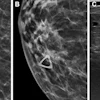
![A normal mammogram confirmed by three-year radiologic follow-up illustrates reader-marked regions of interest (ROIs) during (A) unaided (round 1) and (B) artificial intelligence (AI)–assisted (round 2) reading. Each colored dot represents an ROI for recall by a human reader. Readers could mark more than one ROI per case, represented by multiple dots of the same color. During AI-assisted reading, the AI system displayed three visible prompts: two with suspicion of malignancy scores of 35% (left mediolateral oblique [L MLO] and craniocaudal [L CC]) and one with a suspicion of malignancy score of 10% (right craniocaudal [R CC]), shown as polygonal overlays. Without AI, six of 10 readers (60%) marked a false-positive ROI. With AI assistance, this fell to two of 10 (20%). R MLO = right mediolateral oblique.](https://img.auntminnie.com/mindful/smg/workspaces/default/uploads/2026/07/2026-07-14-radiology-mammogram-ai-auto-bias.H0bYO8QlWs.jpg?auto=format%2Ccompress&fit=crop&h=100&q=70&w=100)


![A normal mammogram confirmed by three-year radiologic follow-up illustrates reader-marked regions of interest (ROIs) during (A) unaided (round 1) and (B) artificial intelligence (AI)–assisted (round 2) reading. Each colored dot represents an ROI for recall by a human reader. Readers could mark more than one ROI per case, represented by multiple dots of the same color. During AI-assisted reading, the AI system displayed three visible prompts: two with suspicion of malignancy scores of 35% (left mediolateral oblique [L MLO] and craniocaudal [L CC]) and one with a suspicion of malignancy score of 10% (right craniocaudal [R CC]), shown as polygonal overlays. Without AI, six of 10 readers (60%) marked a false-positive ROI. With AI assistance, this fell to two of 10 (20%). R MLO = right mediolateral oblique.](https://img.auntminnie.com/mindful/smg/workspaces/default/uploads/2026/07/2026-07-14-radiology-mammogram-ai-auto-bias.H0bYO8QlWs.jpg?auto=format%2Ccompress&fit=crop&h=112&q=70&w=112)