The San Antonio Breast Cancer Symposium (SABCS) and the American Association for Cancer Research (AACR) will honor two researchers at the 2019 SABCS meeting in December in San Antonio.
Dr. Myles Brown, a professor of medicine at Dana-Farber Cancer Institute and Harvard Medical School, will receive the 2019 AACR Distinguished Lectureship in Breast Cancer Research award for his pioneering research involving steroid receptor coregulators. His research also advanced knowledge of steroid hormones and the role of nuclear hormone receptors in normal physiology and breast cancer.
Dr. Celina Kleer will receive the 2019 AACR Outstanding Investigator Award for Breast Cancer Research in recognition of her work generating insights into the development of aggressive forms of breast cancer and characterizing clinical biomarkers and potential therapeutic targets for these cancer subsets. Her research led to both the initial demonstration of EZH2 overexpression in metastatic hormone receptor-negative breast cancer and molecular determinants of metaplastic breast carcinoma.
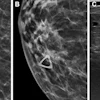
![A normal mammogram confirmed by three-year radiologic follow-up illustrates reader-marked regions of interest (ROIs) during (A) unaided (round 1) and (B) artificial intelligence (AI)–assisted (round 2) reading. Each colored dot represents an ROI for recall by a human reader. Readers could mark more than one ROI per case, represented by multiple dots of the same color. During AI-assisted reading, the AI system displayed three visible prompts: two with suspicion of malignancy scores of 35% (left mediolateral oblique [L MLO] and craniocaudal [L CC]) and one with a suspicion of malignancy score of 10% (right craniocaudal [R CC]), shown as polygonal overlays. Without AI, six of 10 readers (60%) marked a false-positive ROI. With AI assistance, this fell to two of 10 (20%). R MLO = right mediolateral oblique.](https://img.auntminnie.com/mindful/smg/workspaces/default/uploads/2026/07/2026-07-14-radiology-mammogram-ai-auto-bias.H0bYO8QlWs.jpg?auto=format%2Ccompress&fit=crop&h=100&q=70&w=100)


![A normal mammogram confirmed by three-year radiologic follow-up illustrates reader-marked regions of interest (ROIs) during (A) unaided (round 1) and (B) artificial intelligence (AI)–assisted (round 2) reading. Each colored dot represents an ROI for recall by a human reader. Readers could mark more than one ROI per case, represented by multiple dots of the same color. During AI-assisted reading, the AI system displayed three visible prompts: two with suspicion of malignancy scores of 35% (left mediolateral oblique [L MLO] and craniocaudal [L CC]) and one with a suspicion of malignancy score of 10% (right craniocaudal [R CC]), shown as polygonal overlays. Without AI, six of 10 readers (60%) marked a false-positive ROI. With AI assistance, this fell to two of 10 (20%). R MLO = right mediolateral oblique.](https://img.auntminnie.com/mindful/smg/workspaces/default/uploads/2026/07/2026-07-14-radiology-mammogram-ai-auto-bias.H0bYO8QlWs.jpg?auto=format%2Ccompress&fit=crop&h=112&q=70&w=112)