Men at increased risk for breast cancer need regular screening mammography just as their female counterparts do, according to a new study published online July 6 in Breast Cancer Research and Treatment.
In fact, men at higher risk of breast cancer have cancer detection rates on screening mammography similar to women at average risk, wrote a team led by Dr. Maria Marino of Memorial Sloan Kettering Cancer Center in New York City.
"In our cohort, screening mammography yielded a cancer detection rate of 4.9 cancers per 1,000 examinations, which is like the detection rate of screening mammography in a population of women at average risk," the group wrote. "[This indicates] that screening mammography is of value in male patients at high risk for breast cancer."
Male breast cancer is rare, representing 1% of all breast cancers in the U.S. But up to 20% of men diagnosed with the disease have a family history of breast and ovarian cancer, and about 10% have a BRCA2 mutation, Marino and colleagues noted. Men who do develop breast cancer often present at a more advanced stage than women do, with up to 47% having axillary nodal involvement at the time of diagnosis, according to the group.
"In theory, as with women, earlier diagnosis of male breast cancer should provide considerable improvement in clinical outcomes," the researchers wrote.
Currently, no general breast cancer screening recommendations exist for men, and none exist for men with a personal or family history of the disease. So Marino's group assessed the efficacy of mammography for breast cancer screening in a cohort of men at increased risk for the disease.
The study included mammography records and clinical data from 163 asymptomatic men with a family or personal history of breast cancer or with a known BRCA mutation who underwent 806 screening mammograms between September 2011 and July 2018.
Of the 163 men, 125 (77%) had a personal history of breast cancer, and 72 (44%) had a family history of the disease. Twenty-four (15%) were known mutation carriers, 17% of whom had the BRCA1 mutation and 83% of whom had the BRCA2 mutation.
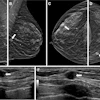
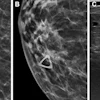
Although 98% of the screening mammograms were negative (i.e., categorized as BI-RADS 1 or 2), four mammograms were abnormal (BI-RADS 4 or 5) and all of these were malignant, for a cancer detection rate of 4.9 cancers per 1,000 exams.
The study results suggest that screening mammography could be helpful for men at high risk of breast cancer, according to the authors. But more research is needed with larger study cohorts.
"The American College of Radiology Appropriateness Criteria Committee recently recommended ... mammography or digital breast tomosynthesis in men aged 25 and older if there are symptoms or if physical examination is suspicious for breast cancer," the group wrote. "In this study, we showed that in asymptomatic men at high risk for developing breast cancer, mammography can be useful as well."