Cancer risk assessment software firm CancerIQ is highlighting positive clinical results from research presented March 17 at the National Consortium of Breast Centers (NCBC) annual Interdisciplinary Breast Center meeting in Las Vegas.
In a study to assess a program for screening and identifying women at high risk for hereditary breast cancer, researchers from Riverside Healthcare of Kankakee, IL, compared results from a paper screening system between September 2016 and August 2017 with those from CancerIQ's Screening Toolkit between September 2017 and August 2018.
The research showed that CancerIQ's Screening Toolkit identified 2.5 times more women as having a high hereditary risk of breast cancer and doubled the number of women eligible for ongoing breast MRI surveillance compared with the paper system, the company said.
In other CancerIQ news, the company has formed news partnerships with Cordata Healthcare Innovations, MRS Systems, and PenRad Technologies.
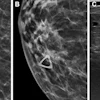




![A normal mammogram confirmed by three-year radiologic follow-up illustrates reader-marked regions of interest (ROIs) during (A) unaided (round 1) and (B) artificial intelligence (AI)–assisted (round 2) reading. Each colored dot represents an ROI for recall by a human reader. Readers could mark more than one ROI per case, represented by multiple dots of the same color. During AI-assisted reading, the AI system displayed three visible prompts: two with suspicion of malignancy scores of 35% (left mediolateral oblique [L MLO] and craniocaudal [L CC]) and one with a suspicion of malignancy score of 10% (right craniocaudal [R CC]), shown as polygonal overlays. Without AI, six of 10 readers (60%) marked a false-positive ROI. With AI assistance, this fell to two of 10 (20%). R MLO = right mediolateral oblique.](https://img.auntminnie.com/mindful/smg/workspaces/default/uploads/2026/07/2026-07-14-radiology-mammogram-ai-auto-bias.H0bYO8QlWs.jpg?auto=format%2Ccompress&fit=crop&h=112&q=70&w=112)


