Budget bill HR 1625 signed into law on March 23 by President Donald Trump includes protections for mammography screening, according to the American College of Radiology (ACR).
The protections, previously passed in the Consolidated Appropriations Act in 2015 and extended in 2017, recognize -- for insurance coverage purposes -- U.S. Preventive Services Task Force (USPSTF) 2002 guidelines that call for screening every one to two years starting at age 40, rather than biennial screening for those ages 50 to 74 as recommended by the task force's 2009/2016 guidelines, the ACR said.
Using the 2009/2016 guidelines would result in up to 13,770 more breast cancer deaths each year in the U.S., and more women would undergo more extensive treatment than if their cancers were found earlier, the ACR said.





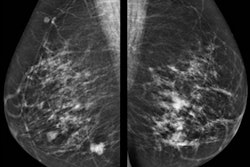
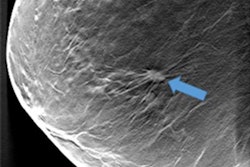



![A normal mammogram confirmed by three-year radiologic follow-up illustrates reader-marked regions of interest (ROIs) during (A) unaided (round 1) and (B) artificial intelligence (AI)–assisted (round 2) reading. Each colored dot represents an ROI for recall by a human reader. Readers could mark more than one ROI per case, represented by multiple dots of the same color. During AI-assisted reading, the AI system displayed three visible prompts: two with suspicion of malignancy scores of 35% (left mediolateral oblique [L MLO] and craniocaudal [L CC]) and one with a suspicion of malignancy score of 10% (right craniocaudal [R CC]), shown as polygonal overlays. Without AI, six of 10 readers (60%) marked a false-positive ROI. With AI assistance, this fell to two of 10 (20%). R MLO = right mediolateral oblique.](https://img.auntminnie.com/mindful/smg/workspaces/default/uploads/2026/07/2026-07-14-radiology-mammogram-ai-auto-bias.H0bYO8QlWs.jpg?auto=format%2Ccompress&fit=crop&h=112&q=70&w=112)


