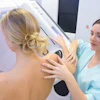
Dutch women's imaging software developer ScreenPoint Medical will present its Transpara artificial intelligence (AI)-based software for mammograms and digital breast tomosynthesis (DBT) exams at next week's RSNA 2017 meeting in Chicago.
Using image analysis and deep-learning technology, Transpara is designed to assist radiologists by automatically identifying soft-tissue abnormalities and calcified lesions on mammograms and DBT exams. It then combines the findings of all available views into a single cancer suspiciousness score on a 10-point scale, according to ScreenPoint.
The software has received the European CE Mark for use with Hologic, GE Healthcare, Philips Healthcare, and Siemens Healthineers digital mammography systems. Transpara is still investigational in the U.S. and will be shown at the meeting integrated with breast imaging workstations from Sectra and Siemens, according to the company.
ScreenPoint said Transpara will also be the subject of two presentations on November 29 at RSNA 2017.