Medical software developer Densitas is highlighting research presented at a workshop this week that it says demonstrates the value of its automated breast density software.
In a presentation at the University of California, San Francisco (UCSF) International Breast Density and Cancer Risk Assessment Workshop, researchers from the University of Manchester discussed their work on measuring the relationship between the software's density assessments and the risk of interval and screen-detected cancers. They found that the Densitas software produced density measures that predicted breast cancer risk.
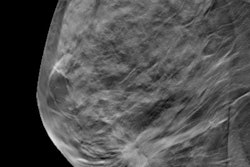
The findings suggest the software could be a practical method for stratifying the risk of women by analyzing digital mammograms, according to the company. Densitas believes that its software is advantageous because it can analyze routinely stored digital mammograms and prior images that have standard processing, compared with other algorithms that only process raw images.