Computer-aided detection (CAD) developer iCAD is touting two studies at RSNA 2016 that show CAD's ability to aid in breast cancer detection.
A study by Dr. Richard Benedikt involved 20 radiologists who retrospectively reviewed 240 digital tomosynthesis cases in a multireader, multicase crossover design. He found that the use of iCAD's concurrent CAD system decreased radiologist reading time 29.2% on average without sacrificing performance compared with reading results without CAD.
The second study by Dr. Corinne Balleyguier involved six radiologists who read 80 digital breast tomosynthesis cases. Results of the pilot study showed that the use of the concurrent iCAD system decreased radiologist reading time 23.5% on average without sacrificing performance, as compared with reading without CAD.






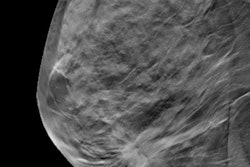


![A normal mammogram confirmed by three-year radiologic follow-up illustrates reader-marked regions of interest (ROIs) during (A) unaided (round 1) and (B) artificial intelligence (AI)–assisted (round 2) reading. Each colored dot represents an ROI for recall by a human reader. Readers could mark more than one ROI per case, represented by multiple dots of the same color. During AI-assisted reading, the AI system displayed three visible prompts: two with suspicion of malignancy scores of 35% (left mediolateral oblique [L MLO] and craniocaudal [L CC]) and one with a suspicion of malignancy score of 10% (right craniocaudal [R CC]), shown as polygonal overlays. Without AI, six of 10 readers (60%) marked a false-positive ROI. With AI assistance, this fell to two of 10 (20%). R MLO = right mediolateral oblique.](https://img.auntminnie.com/mindful/smg/workspaces/default/uploads/2026/07/2026-07-14-radiology-mammogram-ai-auto-bias.H0bYO8QlWs.jpg?auto=format%2Ccompress&fit=crop&h=112&q=70&w=112)


