
A coalition of patient groups and breast cancer experts are appealing to the U.S. Congress to protect a mandate in the Affordable Care Act (ACA) that requires insurers to cover annual screening mammograms for women 40 and older.
The mandate prevents insurers from basing coverage decisions on the most current breast cancer screening guideline from the U.S. Preventive Services Task Force (USPSTF), which recommends only biennial screening for those 50 to 74. Because the moratorium expires December 31, 2017, advocacy groups are lobbying Congress to include it in the final version of a larger appropriations bill under consideration.
Why is the mandate needed? The ACA requires private insurers to cover exams and procedures given an "A" or "B" ranking by the USPSTF. But the USPSTF's most current guideline for screening mammography ranks annual screening for those 40 to 49 at "C" and annual screening for women 75 and older at "I" (which stands for "insufficient evidence"). The statute directs insurers to use the USPSTF's 2002 recommendations for women 40 and older, which ranks annual screening at "B."
The patient groups backing the mandate include the following:
- American College of Radiology (ACR)
- American Congress of Obstetricians and Gynecologists (ACOG)
- Black Women's Health Imperative
- Bright Pink
- DenseBreast-info.org
- FORCE: Facing Our Risk of Cancer Empowered
- Living Beyond Breast Cancer
- Men Against Breast Cancer
- National Comprehensive Cancer Network
- National Consortium of Breast Centers
- Prevent Cancer Foundation
- Society of Breast Imaging (SBI)
"If Congress allows mandatory mammography insurance coverage to lapse for women 40 and older, many won't be able to afford to get mammograms," said Dr. Debra Monticciolo, chair of the ACR's breast imaging commission, in a statement. "Screening rates will drop. More women will die and the gains we have made against breast cancer may evaporate."
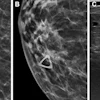

![A normal mammogram confirmed by three-year radiologic follow-up illustrates reader-marked regions of interest (ROIs) during (A) unaided (round 1) and (B) artificial intelligence (AI)–assisted (round 2) reading. Each colored dot represents an ROI for recall by a human reader. Readers could mark more than one ROI per case, represented by multiple dots of the same color. During AI-assisted reading, the AI system displayed three visible prompts: two with suspicion of malignancy scores of 35% (left mediolateral oblique [L MLO] and craniocaudal [L CC]) and one with a suspicion of malignancy score of 10% (right craniocaudal [R CC]), shown as polygonal overlays. Without AI, six of 10 readers (60%) marked a false-positive ROI. With AI assistance, this fell to two of 10 (20%). R MLO = right mediolateral oblique.](https://img.auntminnie.com/mindful/smg/workspaces/default/uploads/2026/07/2026-07-14-radiology-mammogram-ai-auto-bias.H0bYO8QlWs.jpg?auto=format%2Ccompress&fit=crop&h=100&q=70&w=100)


![A normal mammogram confirmed by three-year radiologic follow-up illustrates reader-marked regions of interest (ROIs) during (A) unaided (round 1) and (B) artificial intelligence (AI)–assisted (round 2) reading. Each colored dot represents an ROI for recall by a human reader. Readers could mark more than one ROI per case, represented by multiple dots of the same color. During AI-assisted reading, the AI system displayed three visible prompts: two with suspicion of malignancy scores of 35% (left mediolateral oblique [L MLO] and craniocaudal [L CC]) and one with a suspicion of malignancy score of 10% (right craniocaudal [R CC]), shown as polygonal overlays. Without AI, six of 10 readers (60%) marked a false-positive ROI. With AI assistance, this fell to two of 10 (20%). R MLO = right mediolateral oblique.](https://img.auntminnie.com/mindful/smg/workspaces/default/uploads/2026/07/2026-07-14-radiology-mammogram-ai-auto-bias.H0bYO8QlWs.jpg?auto=format%2Ccompress&fit=crop&h=112&q=70&w=112)