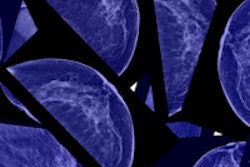
Whether women are categorized as having dense breast tissue can vary from mammogram to mammogram, with as many as 19% having their categorization change from one exam to the next, according to a new study published online in the Annals of Internal Medicine.
In addition, while supplemental screenings for women with dense breasts do find additional cancers, they also increase false-positive results, wrote researchers from the University of California, Davis (Ann Int Med, January 12, 2016).
Dr. Joy Melnikow and colleagues reviewed 24 studies to investigate the consistency of breast density categorization for women with dense breasts. One study showed that different radiologists assigned the same BI-RADS category to an individual woman only 82% of the time, while other data showed that as many as 22% of women were reclassified from dense to nondense (or vice versa) on consecutive mammograms.
Long-term, rigorous research is needed to better standardize breast density classification and determine whether supplemental screenings provide actual health benefits for women, the researchers concluded.
"It's important that policies come from the evidence," Melnikow said in a statement released by the university. "It's also important that women not overreact to information about their breast density."