There are large differences in what employers and employees across the U.S. pay for common healthcare procedures such as mammography, according to a new report from Castlight Health.
A survey of the country's 30 most populous cities found that women can pay as little as $43 and as much as $1,898 for a mammogram. The cost can also vary greatly within the same city.
In Dallas, a woman could pay $50 to $1,045 for a mammogram. In New York City, the price can vary from $130 to $1,898 -- the most expensive mammogram in the country. In Los Angeles, a mammogram ranges from $86 to $954, while the cost is $129 to $860 in the San Francisco Bay Area.
Other results included the following:
- A head/brain CT scan in Washington, DC, can cost $78 to $1,673. However, the DC area was the least expensive for the procedure, with an average price of $592. On average, the same CT scan was most expensive in Indianapolis and Charlotte, NC, at more than $1,300.
- The cost of a lower-back MRI scan in New York City ranged from $334 to $3,939. Indianapolis was on average the most expensive, at $2,307.
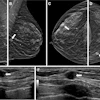
![A normal mammogram confirmed by three-year radiologic follow-up illustrates reader-marked regions of interest (ROIs) during (A) unaided (round 1) and (B) artificial intelligence (AI)–assisted (round 2) reading. Each colored dot represents an ROI for recall by a human reader. Readers could mark more than one ROI per case, represented by multiple dots of the same color. During AI-assisted reading, the AI system displayed three visible prompts: two with suspicion of malignancy scores of 35% (left mediolateral oblique [L MLO] and craniocaudal [L CC]) and one with a suspicion of malignancy score of 10% (right craniocaudal [R CC]), shown as polygonal overlays. Without AI, six of 10 readers (60%) marked a false-positive ROI. With AI assistance, this fell to two of 10 (20%). R MLO = right mediolateral oblique.](https://img.auntminnie.com/mindful/smg/workspaces/default/uploads/2026/07/2026-07-14-radiology-mammogram-ai-auto-bias.H0bYO8QlWs.jpg?auto=format%2Ccompress&fit=crop&h=100&q=70&w=100)


![A normal mammogram confirmed by three-year radiologic follow-up illustrates reader-marked regions of interest (ROIs) during (A) unaided (round 1) and (B) artificial intelligence (AI)–assisted (round 2) reading. Each colored dot represents an ROI for recall by a human reader. Readers could mark more than one ROI per case, represented by multiple dots of the same color. During AI-assisted reading, the AI system displayed three visible prompts: two with suspicion of malignancy scores of 35% (left mediolateral oblique [L MLO] and craniocaudal [L CC]) and one with a suspicion of malignancy score of 10% (right craniocaudal [R CC]), shown as polygonal overlays. Without AI, six of 10 readers (60%) marked a false-positive ROI. With AI assistance, this fell to two of 10 (20%). R MLO = right mediolateral oblique.](https://img.auntminnie.com/mindful/smg/workspaces/default/uploads/2026/07/2026-07-14-radiology-mammogram-ai-auto-bias.H0bYO8QlWs.jpg?auto=format%2Ccompress&fit=crop&h=112&q=70&w=112)