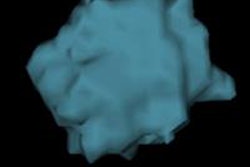
Digital x-ray firm Kubtec said it has received a U.S. patent for the 3D TomoSpec tomosynthesis technology incorporated into its Mozart 3D digital specimen radiography system.
The technology for portable 3D digital specimens enables surgeons to bring 3D tomosynthesis into the operating room, freeing up the time previously required to have 3D images processed offsite, Kubtec said.
In lumpectomy and partial mastectomy procedures, 3D TomoSpec allows surgeons to make intraoperative decisions about the excision of tumor margins faster and more precisely, according to the company. The goal is to reduce surgical time and the need for repeat lumpectomy procedures, which now occur in about one-quarter of cases.







![A normal mammogram confirmed by three-year radiologic follow-up illustrates reader-marked regions of interest (ROIs) during (A) unaided (round 1) and (B) artificial intelligence (AI)–assisted (round 2) reading. Each colored dot represents an ROI for recall by a human reader. Readers could mark more than one ROI per case, represented by multiple dots of the same color. During AI-assisted reading, the AI system displayed three visible prompts: two with suspicion of malignancy scores of 35% (left mediolateral oblique [L MLO] and craniocaudal [L CC]) and one with a suspicion of malignancy score of 10% (right craniocaudal [R CC]), shown as polygonal overlays. Without AI, six of 10 readers (60%) marked a false-positive ROI. With AI assistance, this fell to two of 10 (20%). R MLO = right mediolateral oblique.](https://img.auntminnie.com/mindful/smg/workspaces/default/uploads/2026/07/2026-07-14-radiology-mammogram-ai-auto-bias.H0bYO8QlWs.jpg?auto=format%2Ccompress&fit=crop&h=112&q=70&w=112)


