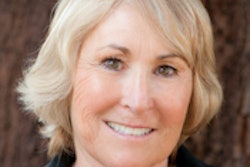
U.S. Sen. Barbara Mikulski (D-MD) has introduced bipartisan legislation to protect free annual mammogram screenings for women ages 40 and older.
S 1296, the Protect Access to Lifesaving Screenings (PALS) Act, is intended to mitigate potential negative effects of the U.S. Preventive Services Task Force (USPSTF) draft breast cancer screening guidelines released in April, which recommend women not be screened until age 50. If the USPSTF screening guidelines are finalized, health plans would no longer be required to cover free annual mammograms for women between the ages of 40 and 49, according to a statement released by Mikulski.
The PALS Act would place a two-year moratorium on USPSTF's recommendations, allowing time for Congress to review the impact these recommendations would have on women being screened, as well as more closely examine the USPSTF process, Mikulski said.
Mikulski is vice chairwoman of the Senate Appropriations Committee and a senior member of the Senate Health, Education, Labor, and Pensions Committee. The bill is co-sponsored by Sen. Kelly Ayotte (R-NH) and is a companion to legislation introduced in the House on July 30 by Reps. Renee Ellmers (R-NC) and Debbie Wasserman Schultz (D-FL).
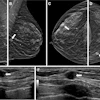
![A normal mammogram confirmed by three-year radiologic follow-up illustrates reader-marked regions of interest (ROIs) during (A) unaided (round 1) and (B) artificial intelligence (AI)–assisted (round 2) reading. Each colored dot represents an ROI for recall by a human reader. Readers could mark more than one ROI per case, represented by multiple dots of the same color. During AI-assisted reading, the AI system displayed three visible prompts: two with suspicion of malignancy scores of 35% (left mediolateral oblique [L MLO] and craniocaudal [L CC]) and one with a suspicion of malignancy score of 10% (right craniocaudal [R CC]), shown as polygonal overlays. Without AI, six of 10 readers (60%) marked a false-positive ROI. With AI assistance, this fell to two of 10 (20%). R MLO = right mediolateral oblique.](https://img.auntminnie.com/mindful/smg/workspaces/default/uploads/2026/07/2026-07-14-radiology-mammogram-ai-auto-bias.H0bYO8QlWs.jpg?auto=format%2Ccompress&fit=crop&h=100&q=70&w=100)


![A normal mammogram confirmed by three-year radiologic follow-up illustrates reader-marked regions of interest (ROIs) during (A) unaided (round 1) and (B) artificial intelligence (AI)–assisted (round 2) reading. Each colored dot represents an ROI for recall by a human reader. Readers could mark more than one ROI per case, represented by multiple dots of the same color. During AI-assisted reading, the AI system displayed three visible prompts: two with suspicion of malignancy scores of 35% (left mediolateral oblique [L MLO] and craniocaudal [L CC]) and one with a suspicion of malignancy score of 10% (right craniocaudal [R CC]), shown as polygonal overlays. Without AI, six of 10 readers (60%) marked a false-positive ROI. With AI assistance, this fell to two of 10 (20%). R MLO = right mediolateral oblique.](https://img.auntminnie.com/mindful/smg/workspaces/default/uploads/2026/07/2026-07-14-radiology-mammogram-ai-auto-bias.H0bYO8QlWs.jpg?auto=format%2Ccompress&fit=crop&h=112&q=70&w=112)