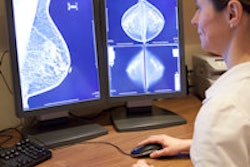
Compliance with cancer screening guidelines is lagging in the U.S., with many adults not receiving the recommended screenings for breast, cervical, and colorectal cancer.
That's according to a new report issued May 7 by the U.S. Centers for Disease Control and Prevention (CDC), which measured screening compliance rates for the three major diseases in 2013.
| Screening compliance rates, 2013 | ||
| Disease | Age range | Screening compliance rate |
| Breast cancer | 50-74 years | 72.6% |
| Colorectal cancer | 50-75 years | 58.2% |
| Cervical cancer | 21-65 years | 80.7% |
The report also showed that screening compliance rates for colorectal and breast cancer were basically unchanged in 2013 compared with 2010, while the use of Pap tests for cervical cancer screening fell in 2013 compared to 2000.
The lowest rates of screening compliance were in adults without insurance or a usual source of healthcare. For example, fewer than 25% of individuals without insurance got colorectal cancer screenings, compared with 60% of those who were covered.
On the positive side, the proportion of women in the highest education and income groups who were screened for breast cancer exceeded targets set in the Healthy People 2020 program; in addition, the proportion of people ages 65 to 75 who underwent colorectal cancer screenings was also near the target.

![A normal mammogram confirmed by three-year radiologic follow-up illustrates reader-marked regions of interest (ROIs) during (A) unaided (round 1) and (B) artificial intelligence (AI)–assisted (round 2) reading. Each colored dot represents an ROI for recall by a human reader. Readers could mark more than one ROI per case, represented by multiple dots of the same color. During AI-assisted reading, the AI system displayed three visible prompts: two with suspicion of malignancy scores of 35% (left mediolateral oblique [L MLO] and craniocaudal [L CC]) and one with a suspicion of malignancy score of 10% (right craniocaudal [R CC]), shown as polygonal overlays. Without AI, six of 10 readers (60%) marked a false-positive ROI. With AI assistance, this fell to two of 10 (20%). R MLO = right mediolateral oblique.](https://img.auntminnie.com/mindful/smg/workspaces/default/uploads/2026/07/2026-07-14-radiology-mammogram-ai-auto-bias.H0bYO8QlWs.jpg?auto=format%2Ccompress&fit=crop&h=100&q=70&w=100)


![A normal mammogram confirmed by three-year radiologic follow-up illustrates reader-marked regions of interest (ROIs) during (A) unaided (round 1) and (B) artificial intelligence (AI)–assisted (round 2) reading. Each colored dot represents an ROI for recall by a human reader. Readers could mark more than one ROI per case, represented by multiple dots of the same color. During AI-assisted reading, the AI system displayed three visible prompts: two with suspicion of malignancy scores of 35% (left mediolateral oblique [L MLO] and craniocaudal [L CC]) and one with a suspicion of malignancy score of 10% (right craniocaudal [R CC]), shown as polygonal overlays. Without AI, six of 10 readers (60%) marked a false-positive ROI. With AI assistance, this fell to two of 10 (20%). R MLO = right mediolateral oblique.](https://img.auntminnie.com/mindful/smg/workspaces/default/uploads/2026/07/2026-07-14-radiology-mammogram-ai-auto-bias.H0bYO8QlWs.jpg?auto=format%2Ccompress&fit=crop&h=112&q=70&w=112)