Breast imaging software developer Three Palm Software has released version 1.7.0 of its WorkstationOne breast imaging workstation.
In this new version, review of digital breast tomosynthesis (DBT) studies has been enhanced, and an expanded suite of document viewing plug-ins has been added, especially to enhance RIS integration. In other features, support for review of associated nonmammogram studies has been expanded with multiviewport layouts, peer worklist synchronization is now more powerful, the built-in worklist has been extended to include support for custom worklists and blinded multireader support, and there have been numerous usability enhancements, according to the company.
Three Palm said it plans to show the new version in its booth at RSNA 2013, and WorkstationOne will also be shown in a number of partner booths, including PACS and digital mammography vendors, as well as all of the major vendors of high-resolution mammography monitors.
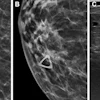









![A normal mammogram confirmed by three-year radiologic follow-up illustrates reader-marked regions of interest (ROIs) during (A) unaided (round 1) and (B) artificial intelligence (AI)–assisted (round 2) reading. Each colored dot represents an ROI for recall by a human reader. Readers could mark more than one ROI per case, represented by multiple dots of the same color. During AI-assisted reading, the AI system displayed three visible prompts: two with suspicion of malignancy scores of 35% (left mediolateral oblique [L MLO] and craniocaudal [L CC]) and one with a suspicion of malignancy score of 10% (right craniocaudal [R CC]), shown as polygonal overlays. Without AI, six of 10 readers (60%) marked a false-positive ROI. With AI assistance, this fell to two of 10 (20%). R MLO = right mediolateral oblique.](https://img.auntminnie.com/mindful/smg/workspaces/default/uploads/2026/07/2026-07-14-radiology-mammogram-ai-auto-bias.H0bYO8QlWs.jpg?auto=format%2Ccompress&fit=crop&h=112&q=70&w=112)


