Reps. Rosa DeLauro (D-CT) and Steve Israel (D-NY) have once again introduced breast density notification legislation in the U.S. House of Representatives.
The Breast Density and Mammography Reporting Act would help raise awareness of breast cancer risks for women with dense tissue and the importance of appropriate screening. Sen. Dianne Feinstein (D-CA) plans to introduce a companion bill in the Senate, according to a statement released by DeLauro.
DeLauro and Israel introduced similar legislation to the 112th Congress in 2011.
Also, the Pennsylvania General Assembly has submitted breast density notification legislation SB 358 to Gov. Tom Corbett for signature. Once the bill is signed, Pennsylvania will become the 13th state with a breast density notification law on the books, according to Nancy Cappello, PhD, president of breast density advocacy organization Are You Dense.
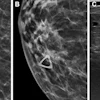








![A normal mammogram confirmed by three-year radiologic follow-up illustrates reader-marked regions of interest (ROIs) during (A) unaided (round 1) and (B) artificial intelligence (AI)–assisted (round 2) reading. Each colored dot represents an ROI for recall by a human reader. Readers could mark more than one ROI per case, represented by multiple dots of the same color. During AI-assisted reading, the AI system displayed three visible prompts: two with suspicion of malignancy scores of 35% (left mediolateral oblique [L MLO] and craniocaudal [L CC]) and one with a suspicion of malignancy score of 10% (right craniocaudal [R CC]), shown as polygonal overlays. Without AI, six of 10 readers (60%) marked a false-positive ROI. With AI assistance, this fell to two of 10 (20%). R MLO = right mediolateral oblique.](https://img.auntminnie.com/mindful/smg/workspaces/default/uploads/2026/07/2026-07-14-radiology-mammogram-ai-auto-bias.H0bYO8QlWs.jpg?auto=format%2Ccompress&fit=crop&h=112&q=70&w=112)


