Monday, November 26 | 10:10 a.m.-10:20 a.m. | VSMI21-09 | Arie Crown Theater
When used in conjunction with mammography, breast-specific gamma imaging (BSGI) increases cancer detection by 2.5% in women with dense breast tissue, which is comparable to the 2.1% increase in detection reported for breast MRI, according to researchers from George Washington University.Dr. Rachel Brem and colleagues retrospectively reviewed 364 BSGI exams performed between April 2010 and September 2011 on women at increased risk of breast cancer. Nine exams (2.5%) found cancer missed on mammography, and all of these were in women with dense breasts, leading the team to conclude that BSGI is a reliable adjunct modality that increases breast cancer detection in high-risk women, at levels comparable to breast MRI.





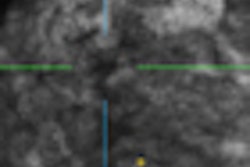


![A normal mammogram confirmed by three-year radiologic follow-up illustrates reader-marked regions of interest (ROIs) during (A) unaided (round 1) and (B) artificial intelligence (AI)–assisted (round 2) reading. Each colored dot represents an ROI for recall by a human reader. Readers could mark more than one ROI per case, represented by multiple dots of the same color. During AI-assisted reading, the AI system displayed three visible prompts: two with suspicion of malignancy scores of 35% (left mediolateral oblique [L MLO] and craniocaudal [L CC]) and one with a suspicion of malignancy score of 10% (right craniocaudal [R CC]), shown as polygonal overlays. Without AI, six of 10 readers (60%) marked a false-positive ROI. With AI assistance, this fell to two of 10 (20%). R MLO = right mediolateral oblique.](https://img.auntminnie.com/mindful/smg/workspaces/default/uploads/2026/07/2026-07-14-radiology-mammogram-ai-auto-bias.H0bYO8QlWs.jpg?auto=format%2Ccompress&fit=crop&h=112&q=70&w=112)


