GE Healthcare is joining with imaging services firm RadNet to pilot GE's Best Pathways initiative, a breast cancer detection optimization model.
GE Healthcare and RadNet will evaluate the clinical breast cancer detection process, identifying inefficient diagnostic patterns and ways to lower cost and improve patient outcomes. The program will focus on subpopulations of women in which guidelines are lacking and substantial variability is observed in clinical practice, according to GE.
The Best Pathways initiative was developed in collaboration with academic and community mammographers, primary care physicians, and breast surgeons to explore alternative detection strategies and understand the need for new diagnostic technologies, GE said.





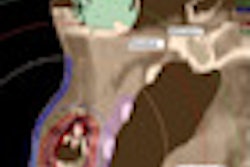


![A normal mammogram confirmed by three-year radiologic follow-up illustrates reader-marked regions of interest (ROIs) during (A) unaided (round 1) and (B) artificial intelligence (AI)–assisted (round 2) reading. Each colored dot represents an ROI for recall by a human reader. Readers could mark more than one ROI per case, represented by multiple dots of the same color. During AI-assisted reading, the AI system displayed three visible prompts: two with suspicion of malignancy scores of 35% (left mediolateral oblique [L MLO] and craniocaudal [L CC]) and one with a suspicion of malignancy score of 10% (right craniocaudal [R CC]), shown as polygonal overlays. Without AI, six of 10 readers (60%) marked a false-positive ROI. With AI assistance, this fell to two of 10 (20%). R MLO = right mediolateral oblique.](https://img.auntminnie.com/mindful/smg/workspaces/default/uploads/2026/07/2026-07-14-radiology-mammogram-ai-auto-bias.H0bYO8QlWs.jpg?auto=format%2Ccompress&fit=crop&h=112&q=70&w=112)


