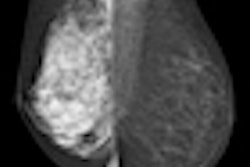
Women with dense breasts have a much higher risk of developing breast cancer than other women; however, greater density does not seem to be linked to death from the disease, according to a study published on Monday in the Journal of the National Cancer Institute.
Instead, the study of more than 9,000 women revealed that patients who had low-density breasts and were obese, had tumors larger than 2 cm, or had high-grade tumors were at an increased risk of death from breast cancer.
These findings surprised the research team from the U.S. National Cancer Institute (NCI). Principal investigator Gretchen Gierach, PhD, from the division of cancer epidemiology and genetics, and colleagues had hypothesized that increased breast density would be associated with increased risk of death (JNCI, August 20, 2012).
The patient cohort included women registered in five of the seven U.S. mammography registries. These included the Group Health Cooperative in Seattle, the New Hampshire Mammography Network, the New Mexico Mammography Project, the San Francisco Mammography Registry, and the Vermont Breast Cancer Surveillance System.
Out of more than 26,500 women who were diagnosed with cancer between January 1996 and December 2005, 9,232 had records that were complete enough for inclusion in the study. On average, patients had been followed for 6.6 years.
A total of 1,795 women had died, including 889 from breast cancer. The research team did not identify any association between BI-RADS breast density and death, whether based on all causes, overall, or in stage-stratified analyses.
Results did show a link between breast cancer death and low breast density in certain subgroups, however. For example, there was an increased risk of death among women with BI-RADS 1 density who were either obese or had tumors 2 cm or larger, Gierach and colleagues wrote.
"One explanation for the increased risks associated with low density among some subgroups is that breasts with a higher percentage of fat may contribute to a tumor microenvironment that facilitates cancer growth and progression," the authors wrote. "Given the rising prevalence of obesity worldwide, it is likely that the number of women who are obese and have low breast density will also rise, and therefore this group may benefit from modified treatment and increased surveillance efforts."