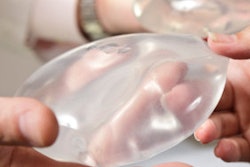
The U.S. Food and Drug Administration (FDA) has approved a silicone gel-filled breast implant manufactured by Sientra for breast size augmentation in women at least 22 years old and to rebuild breast tissue in women of any age.
As a condition of clearance, Sientra will continue to follow 1,788 clinical trial participants from their premarket study for seven more years. The company will also conduct a 10-year study of 4,782 women who received Sientra breast implants to collect information on long-term local complications such as capsular contracture, as well as less common disease outcomes including rheumatoid arthritis and breast and lung cancer.
The company will also conduct five case-controlled studies to evaluate the association between Sientra's silicone gel-filled breast implants and five rare diseases: rare connective tissue disease, neurological disease, brain cancer, cervical/vulvar cancer, and lymphoma.
In a prepared statement, Dr. William Maisel, deputy director for science in the FDA's Center for Devices and Radiological Health, said the data on silicone gel-filled breast implants continue to demonstrate a reasonable assurance of safety and effectiveness.
Currently, there are three FDA-approved silicone gel-filled breast implants in the U.S. manufactured by Allergan, Mentor, and Sientra.