Dear AuntMinnie Member,
Whew! Hope you've all had a chance to decompress after last week's RSNA meeting. Whether you were walking the hallowed halls of McCormick Place or following from home, it can be tough to process everything in a single week, so be sure to check back in our RADCast @ RSNA at radcast.auntminnie.com to make sure you didn't miss anything.
We'll continue to provide you with news on presentations from the meeting in the weeks to come; one such presentation concerns the effects of regular mammography screening on mastectomy rates.
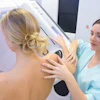
British researchers found that younger women who received annual mammograms had mastectomy rates that were less than half the rates of women who weren't being screened annually. Annual screening also conferred other outcomes benefits -- find out what they are by clicking here.
And in another story, U.S. researchers discussed their use of a fast MRI technique that's capable of acquiring images of children in 20 seconds -- thus ruling out the need for sedation or for ionizing modalities such as CT. Learn how the protocol worked in monitoring the treatment of children with hydrocephalus by clicking here.
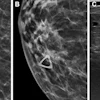
![A normal mammogram confirmed by three-year radiologic follow-up illustrates reader-marked regions of interest (ROIs) during (A) unaided (round 1) and (B) artificial intelligence (AI)–assisted (round 2) reading. Each colored dot represents an ROI for recall by a human reader. Readers could mark more than one ROI per case, represented by multiple dots of the same color. During AI-assisted reading, the AI system displayed three visible prompts: two with suspicion of malignancy scores of 35% (left mediolateral oblique [L MLO] and craniocaudal [L CC]) and one with a suspicion of malignancy score of 10% (right craniocaudal [R CC]), shown as polygonal overlays. Without AI, six of 10 readers (60%) marked a false-positive ROI. With AI assistance, this fell to two of 10 (20%). R MLO = right mediolateral oblique.](https://img.auntminnie.com/mindful/smg/workspaces/default/uploads/2026/07/2026-07-14-radiology-mammogram-ai-auto-bias.H0bYO8QlWs.jpg?auto=format%2Ccompress&fit=crop&h=100&q=70&w=100)


![A normal mammogram confirmed by three-year radiologic follow-up illustrates reader-marked regions of interest (ROIs) during (A) unaided (round 1) and (B) artificial intelligence (AI)–assisted (round 2) reading. Each colored dot represents an ROI for recall by a human reader. Readers could mark more than one ROI per case, represented by multiple dots of the same color. During AI-assisted reading, the AI system displayed three visible prompts: two with suspicion of malignancy scores of 35% (left mediolateral oblique [L MLO] and craniocaudal [L CC]) and one with a suspicion of malignancy score of 10% (right craniocaudal [R CC]), shown as polygonal overlays. Without AI, six of 10 readers (60%) marked a false-positive ROI. With AI assistance, this fell to two of 10 (20%). R MLO = right mediolateral oblique.](https://img.auntminnie.com/mindful/smg/workspaces/default/uploads/2026/07/2026-07-14-radiology-mammogram-ai-auto-bias.H0bYO8QlWs.jpg?auto=format%2Ccompress&fit=crop&h=112&q=70&w=112)