Carestream Health of Rochester, NY, has introduced a new screen for its computed radiography (CR) mammography systems.
The new EHR-M3 reduces noise by 20% and has a high detective quantum efficiency (DQE) for improved image quality, according to Carestream. It is now included in Carestream's mammography cassettes in both 18 x 24-cm and 24 x 30-cm sizes and is compatible with the company's existing DirectView CR 850/950/975 and DirectView Classic and Elite CR systems, which are being used for mammography applications.
Carestream's CR mammography feature is now available in Canada, Europe, South America, Australia, and Asia, Carestream said.
Related Reading
Carestream inks deal with Technology Partners, January 8, 2010
Carestream wins spot on VA PACS list, December 10, 2009
Carestream signs deal with MedAssets, November 18, 2009
Carestream to show mobile DR kits at RSNA, November 13, 2009
Carestream to highlight RIS, SuperPACS at RSNA, November 2, 2009
Copyright © 2010 AuntMinnie.com
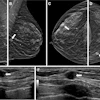
![A normal mammogram confirmed by three-year radiologic follow-up illustrates reader-marked regions of interest (ROIs) during (A) unaided (round 1) and (B) artificial intelligence (AI)–assisted (round 2) reading. Each colored dot represents an ROI for recall by a human reader. Readers could mark more than one ROI per case, represented by multiple dots of the same color. During AI-assisted reading, the AI system displayed three visible prompts: two with suspicion of malignancy scores of 35% (left mediolateral oblique [L MLO] and craniocaudal [L CC]) and one with a suspicion of malignancy score of 10% (right craniocaudal [R CC]), shown as polygonal overlays. Without AI, six of 10 readers (60%) marked a false-positive ROI. With AI assistance, this fell to two of 10 (20%). R MLO = right mediolateral oblique.](https://img.auntminnie.com/mindful/smg/workspaces/default/uploads/2026/07/2026-07-14-radiology-mammogram-ai-auto-bias.H0bYO8QlWs.jpg?auto=format%2Ccompress&fit=crop&h=100&q=70&w=100)


![A normal mammogram confirmed by three-year radiologic follow-up illustrates reader-marked regions of interest (ROIs) during (A) unaided (round 1) and (B) artificial intelligence (AI)–assisted (round 2) reading. Each colored dot represents an ROI for recall by a human reader. Readers could mark more than one ROI per case, represented by multiple dots of the same color. During AI-assisted reading, the AI system displayed three visible prompts: two with suspicion of malignancy scores of 35% (left mediolateral oblique [L MLO] and craniocaudal [L CC]) and one with a suspicion of malignancy score of 10% (right craniocaudal [R CC]), shown as polygonal overlays. Without AI, six of 10 readers (60%) marked a false-positive ROI. With AI assistance, this fell to two of 10 (20%). R MLO = right mediolateral oblique.](https://img.auntminnie.com/mindful/smg/workspaces/default/uploads/2026/07/2026-07-14-radiology-mammogram-ai-auto-bias.H0bYO8QlWs.jpg?auto=format%2Ccompress&fit=crop&h=112&q=70&w=112)