Mammography Reporting System (MRS) of Seattle is partnering with Myriad Genetics of Salt Lake City to help identify patients at high risk for hereditary breast cancer.
MRS will incorporate warnings for hereditary breast cancer risk in its breast cancer tracking software with the help of Myriad's BRACAnalysis breast cancer predisposition test.
BRACAnalysis is designed to assess a woman's risk of developing breast or ovarian cancer based on detection of mutations in the BRCA1 and BRCA2 genes.
Related Reading
Road to RSNA, Women's Imaging, Mammography Reporting System, October 28, 2008
MRS unveils new scheduling software, May 8, 2008
Road to RSNA, Women's Imaging, Mammography Reporting System, October 26, 2007
Road to RSNA, Women's Imaging, Mammography Reporting System, November 9, 2006
Road to RSNA, Healthcare Informatics, Mammography Reporting System, November 7, 2006
Copyright © 2010 AuntMinnie.com
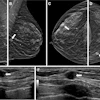
![A normal mammogram confirmed by three-year radiologic follow-up illustrates reader-marked regions of interest (ROIs) during (A) unaided (round 1) and (B) artificial intelligence (AI)–assisted (round 2) reading. Each colored dot represents an ROI for recall by a human reader. Readers could mark more than one ROI per case, represented by multiple dots of the same color. During AI-assisted reading, the AI system displayed three visible prompts: two with suspicion of malignancy scores of 35% (left mediolateral oblique [L MLO] and craniocaudal [L CC]) and one with a suspicion of malignancy score of 10% (right craniocaudal [R CC]), shown as polygonal overlays. Without AI, six of 10 readers (60%) marked a false-positive ROI. With AI assistance, this fell to two of 10 (20%). R MLO = right mediolateral oblique.](https://img.auntminnie.com/mindful/smg/workspaces/default/uploads/2026/07/2026-07-14-radiology-mammogram-ai-auto-bias.H0bYO8QlWs.jpg?auto=format%2Ccompress&fit=crop&h=100&q=70&w=100)


![A normal mammogram confirmed by three-year radiologic follow-up illustrates reader-marked regions of interest (ROIs) during (A) unaided (round 1) and (B) artificial intelligence (AI)–assisted (round 2) reading. Each colored dot represents an ROI for recall by a human reader. Readers could mark more than one ROI per case, represented by multiple dots of the same color. During AI-assisted reading, the AI system displayed three visible prompts: two with suspicion of malignancy scores of 35% (left mediolateral oblique [L MLO] and craniocaudal [L CC]) and one with a suspicion of malignancy score of 10% (right craniocaudal [R CC]), shown as polygonal overlays. Without AI, six of 10 readers (60%) marked a false-positive ROI. With AI assistance, this fell to two of 10 (20%). R MLO = right mediolateral oblique.](https://img.auntminnie.com/mindful/smg/workspaces/default/uploads/2026/07/2026-07-14-radiology-mammogram-ai-auto-bias.H0bYO8QlWs.jpg?auto=format%2Ccompress&fit=crop&h=112&q=70&w=112)