Fischer Imaging's bottom line in the third quarter (end-September 30) profited by the sale of mammography assets to Hologic.
The Denver-based company reported revenue of $13.4 million, compared with revenue of $17.8 million in the third quarter of 2004. The company said that it saw sales and prices decline in the quarter as a result of announcing the sale to Hologic.
On the positive side, the company recorded a one-time gain of $32 million in proceeds from the Hologic sale. That contributed to net income for the quarter of $19.9 million, compared with a net loss of $1.7 million in the same quarter a year ago. Proceeds from the sale were used to repay loans and interest to Hologic as well as to ComVest Investment Partners, a West Palm Beach, FL, investment firm.
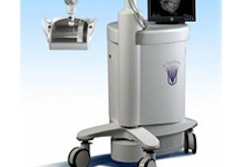
Fischer said it continues to service and support its installed base of SenoScan full-field digital mammography and MammoTest breast biopsy systems, and to satisfy its warranty obligations to marketing partners Ethicon Endo-Surgery of Cincinnati and Philips Medical Systems of Andover, MA. Fischer is exploring "strategic alternatives" for its remaining business in radiography, electrophysiology, and surgery products, as well as its service business, the company said.
By AuntMinnie.com staff writers
November 15, 2005
Related Reading
Hologic acquires Fischer mammo assets, September 29, 2005
Fischer delays shareholder vote on Hologic deal, September 22, 2005
Fischer/Hologic deal spells end for SenoScan FFDM unit, June 30, 2005
Fischer names COO, June 3, 2005
Fischer posts mixed Q1, May 23, 2005
Copyright © 2005 AuntMinnie.com

![A normal mammogram confirmed by three-year radiologic follow-up illustrates reader-marked regions of interest (ROIs) during (A) unaided (round 1) and (B) artificial intelligence (AI)–assisted (round 2) reading. Each colored dot represents an ROI for recall by a human reader. Readers could mark more than one ROI per case, represented by multiple dots of the same color. During AI-assisted reading, the AI system displayed three visible prompts: two with suspicion of malignancy scores of 35% (left mediolateral oblique [L MLO] and craniocaudal [L CC]) and one with a suspicion of malignancy score of 10% (right craniocaudal [R CC]), shown as polygonal overlays. Without AI, six of 10 readers (60%) marked a false-positive ROI. With AI assistance, this fell to two of 10 (20%). R MLO = right mediolateral oblique.](https://img.auntminnie.com/mindful/smg/workspaces/default/uploads/2026/07/2026-07-14-radiology-mammogram-ai-auto-bias.H0bYO8QlWs.jpg?auto=format%2Ccompress&fit=crop&h=100&q=70&w=100)


![A normal mammogram confirmed by three-year radiologic follow-up illustrates reader-marked regions of interest (ROIs) during (A) unaided (round 1) and (B) artificial intelligence (AI)–assisted (round 2) reading. Each colored dot represents an ROI for recall by a human reader. Readers could mark more than one ROI per case, represented by multiple dots of the same color. During AI-assisted reading, the AI system displayed three visible prompts: two with suspicion of malignancy scores of 35% (left mediolateral oblique [L MLO] and craniocaudal [L CC]) and one with a suspicion of malignancy score of 10% (right craniocaudal [R CC]), shown as polygonal overlays. Without AI, six of 10 readers (60%) marked a false-positive ROI. With AI assistance, this fell to two of 10 (20%). R MLO = right mediolateral oblique.](https://img.auntminnie.com/mindful/smg/workspaces/default/uploads/2026/07/2026-07-14-radiology-mammogram-ai-auto-bias.H0bYO8QlWs.jpg?auto=format%2Ccompress&fit=crop&h=112&q=70&w=112)