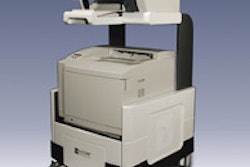
Insight Management Systems, formerly Insight Healthcare Information Systems, will be arriving at this year's RSNA conference with a cluster of informatics applications for the women's imaging market, including the debut of its OmniTrack - Women's Center Manager. The modular system is fully customizable and can adapt to varying work environments, according to the Encino, CA-based firm.
The application, which is both HL7 and DICOM compliant, can be configured from a back-end Mammography Quality Standards Act (MQSA) reporting tool to a complete management system for a women's center, IMS said. OmniTrack, which is available in a Microsoft Windows model as well as in an application service provider (ASP) configuration, features patient medical records, scheduling, front desk, workflow/worklist, file room, transcription, and billing support.
OmniTrack has specialized patient tracking capabilities, including follow up and recall for breast, bone densitometry, and ob/gyn patients, the company said. The product is capable of producing SQL and Crystal reports, has MQSA reporting, communications management, and quality assurance auditing, and uses the American College of Radiology's BI-RADS mammography reporting lexicon.
OmniTrack is targeted at facilities doing mammography, bone densitometry, breast and ob/gyn ultrasound, and any other women's imaging procedures, IMS said. The product will be available in the U.S. this December, and is scheduled for worldwide delivery in March 2005, the firm said.
By Jonathan S. Batchelor
AuntMinnie.com staff writer
November 10, 2004
Copyright © 2004 AuntMinnie.com