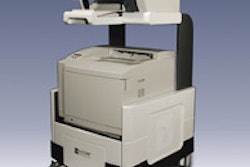
DOBI Medical International will display its Dynamic Optical Breast Imaging (DOBI) ComfortScan system, a noninvasive adjunct device to mammography. Instead of using x-rays, ComfortScan employs near-infrared light and gentle external pressure to detect the growth of new blood vessels (angiogenesis) in suspicious areas of the breast.

Mahwah, NJ-based DOBI has increased its company's profile this year by establishing international distribution agreements, raising funds, and releasing clinical data. This summer, DOBI inked agreements with United Telecoms Limited of Bangalore, India, and with BioTech Medical of Panama City, Panama, to market, sell, and service ComfortScan.
In August, the company accomplished a private placement of $5.2 million in preferred stock and warrants, to be used to market ComfortScan internationally. In September, the company released results from a study it performed with 68 patients and a total of 248 ComfortScan images acquired at four clinical sites between March 2003 and January 2004; scans were read by physicians and with computer assistance. Sensitivity was 98% and 92%, respectively, while specificity was 63% for both reading methods.
ComfortScan's high-intensity, light-emitting diodes send light through breast tissue, recording one image per second with a CCD camera for 45 seconds. If the light hits an angiogenic area, it is absorbed differently, and appears on the ComfortScan image in contrast to healthy tissue. DOBI is currently finalizing the fifth and final stage of the premarket approval (PMA) application for ComfortScan, and expects to list the unit for about $140,000.
By Kate Madden Yee
AuntMinnie.com staff writer
November 10, 2004
Copyright © 2004 AuntMinnie.com