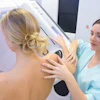
Controversy roils the breast imaging community once again. This time it blows in as a report from the Institute of Medicine recommending that non-physician personnel -- such as technologists -- be trained to prescreen or double-read mammograms. The change would expedite the interpretation process, and increase women's access to breast imaging services, according to the IOM.
Dear AuntMinnie Member,
Controversy roils the breast imaging community once again. This time it blows in as a report from the Institute of Medicine recommending that non-physician personnel -- such as technologists -- be trained to prescreen or double-read mammograms. The change would expedite the interpretation process, and increase women's access to breast imaging services, according to the IOM.
Needless to say, the proposal has met with skepticism, most notably on the part of the American College of Radiology. In an article in our Women's Imaging Digital Community, staff writer Tracie L. Thompson talked with the ACR's chairman about the reasons for their concern. But the article also checks in with other imaging experts, who suggest that the IOM's idea may not be completely wild if it means making mammography more efficient.
In another article, Food and Drug Administration officials offer a survey of adverse events involving augmented breasts during mammograms. Many patients have claimed that their implants sustained damage as a direct result of a breast exam. Could this become yet another legal minefield that mammographers will have to carefully sidestep?
Head over to our Women's Imaging Digital Community for all the details.