

MRI equipment service comes into focus in Episode 3 of "The Invisible Force" podcast on the AuntMinnie Podcast Network.
Hosts Tobias "Toby" Gilk and John Posh, both long-time MRI safety experts and educators, have already unpacked a portion of the mysteries and facts surrounding the July 2025 fatal MRI accident at an open MRI imaging center on Long Island, NY. The series launched January 27 with a two-episode season premiere.
"It's pretty much a requirement to have a service engineer take care of an MRI. They're fussy machines, and they need a lot of TLC to keep them in good working order." -- MRI safety expert and educator Toby Gilk
While "The Invisible Force" Episode 1 delves into the MRI scanning environment surrounding Keith McAllister's entrapment, Episode 2 steps into the emergency response that fateful day, also contrasting the realities of MRI with Hollywood's take in movies like "Final Destination Bloodlines" and shows like "Lone Star 911."
Ultimately, the imaging center and personnel onsite at the open MRI facility didn't prevent the accident in the first place, Gilk has noted. Now that it's happened, their first several options for how to free McAllister have all been unsuccessful, including activating a quench button, according to Gilk.
 Example of an MRI quench button.
"There's actually a precedent for this," Posh explained in Episode 2. "A distributor who managed the sales and installations of MRI scanners for GE in India apparently routinely installed the quench button, but just as routinely failed to wire it up to do what it was supposed to do."
Posh and Gilk also highlight MRI incidents where the quench button played a pivotal role -- where it worked and didn't work.
Safety risks
Many in the AuntMinnie community already know that MRI quenching involves the rapid loss of superconductivity in an MRI unit. Quenching results in the loss of the magnetic field, but it can still take several minutes to disperse the magnetic field. Pushing the quench button creates risks, too -- safety risks for those near the machine and financial risks for the imaging center -- according to Posh.
A manual quench is for life-threatening emergencies, such as a person being pinned against the magnet (as in the McAllister case) or an uncontrollable fire in the MRI room.
At the conclusion of or somewhere during the commission of the MRI, McAllister entered the MRI room. As he did, he evidently took a step backward toward the magnet. A heavy chain he wore around his neck got close enough to the MRI scanner that the scanner's magnetic force pulled McAllister forcefully by the neck into the scanner tube.
The technologist and McAllister's wife tried to pull him out, but the attractive force of the MRI's magnetic field on the 20-lb chain was far too great. Did personnel know how to respond to their situation?
"Imagine their horror when the kill switch didn't, in fact, kill the magnetic field, and they had to scramble with new ways to get him out ... even with police and paramedics on scene, they simply couldn't pull him out." -- Senior MRI Technologist John Posh
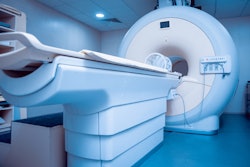
Nassau Open MRI bought this Siemens MRI scanner used, according to Posh. The facility had its service contract with an independent service provider, rather than the original equipment manufacturer.
"That's not a bad thing," Posh said. "That's simply the way the industry works."
The quench button kill switch is a last resort. Did the quench button malfunction in this case? Regardless, when imaging personnel couldn't kill the MRI's magnetic field on their own, they placed a Hail Mary call to their MRI service company.
Listen now as Gilk and Posh probe the rest of the story as they understand it. Remember, MRI service engineers generally are not first responders. Also, this MRI scanner was operating in a semitrailer adjacent to the imaging center facility.
"With how wide MRI scanners are and how narrow semitrailers are, the only way to access the equipment for this MRI was through the freight door at the back end of the trailer," Gilk said. "I'd wager that this is probably pretty unique territory for this service engineer," Posh added.
Listen to Episode 3
Hear even more details in Episode 2
Gilk and Posh have also invited the imaging community and other listeners to contribute to the investigation through The Invisible Force Tip Line -- 631-MRI-TIPS (631-674-8477).
Host
Tobias "Toby" Gilk is the founder of Gilk Radiology Consulting. An architect by training, he has spent over 20 years focusing on MRI safety, initially through the architecture and planning of MRI facilities, but growing into the technology, clinical practice, regulation, and economics of MRI safety. Gilk holds both MR Safety Officer (MRSO) and MR Safety Expert (MRSE) certifications from the American Board of Magnetic Resonance Safety (ABMRS). An evaluator of serious reportable events (SRE), he is also a volunteer member of the Technical Expert Panel (TEP) of the National Quality Forum, and co-author of "The Technologist MRI Safety Handbook."
Co-host
John Posh is an MRI educator, safety consultant, and safety auditor with over 35 years of experience in the field of MRI safety and education, working with outpatient facilities, hospitals, and universities. He owns Posh Education in Bethlehem, PA, and currently serves as global director of education and training for Aspect Imaging, chief academic officer-MRI at John Patrick University, and adjunct professor of medical imaging at Rush University.
This episode of "The Invisible Force" is brought to you by AuntMinnie and the AuntMinnie Podcast Network. You can also find it on Apple Podcasts and Spotify. Check out AuntMinnie's full podcast library, including extras, on Apple Podcasts and Spotify.

.fFmgij6Hin.png?auto=compress%2Cformat&fit=crop&h=100&q=70&w=100)


.fFmgij6Hin.png?auto=compress%2Cformat&fit=crop&h=167&q=70&w=250)


