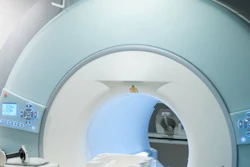
When there is no statutory authority of a state to regulate MRI -- only ionizing radiation, x-ray, and nuclear medicine -- this might be an open door for a fatal MRI safety incident, according to Episode 5 of "The Invisible Force" podcast on the AuntMinnie Podcast Network.
This episode begins Act 2 of investigating the July 2025 fatal MRI incident at Nassau Open MRI in Westbury, NY, and its mysteries.
Imagine you have a giant laser cannon, a Star Wars Death Star-type of thing, but smaller, said host Tobias "Toby" Gilk, a certified MR safety officer and safety expert, MR facility architect, and safety consultant.
Point it at an imaginary hospital building and bore a hole about 30 feet wide through the center of that building. Afterward, you see a 10-story hospital complete in every respect, except for the piece of sky that you now see through a glowing-edged hole in the middle of the building where that MRI used to be.
This is the scope of the New York State Department of Health's (NYDOH) regulation of MRI, Gilk explains, with John Posh, senior MRI technologist and educator, MRI safety auditor, and longtime advocate for MRI safety practices.
Jurisdictional limitations
Episode 5 of "The Invisible Force" takes listeners on a deep dive into jurisdictional limitations, specifically in the context of MRI scanning operations at nonhospital imaging centers like Nassau Open MRI.
First, Gilk and Posh point to the U.S. Food and Drug Administration (FDA) and U.S. Centers for Medicare and Medicaid Services (CMS). After all, the Mammography Quality Standards Act (MQSA) gave the FDA authority over quality and safety at the point of care in a hospital or an imaging center, but only for mammography.
A key element of the MQSA is that mammography centers must be accredited by an FDA-approved private nonprofit or state accreditation body. The CMS also has requirements that providers must meet -- conditions of participation or conditions for coverage -- to participate in its reimbursement programs.
Nassau Open MRI appeared not to have been a participant in either a CMS reimbursement program or an imaging standards organization at the time of the July 2025 incident, Gilk noted from the investigation.
"We figured, perhaps naively, that the 2025 McAlister MRI death would have stirred up a swarm of new activity and discussion around MRI safety in the state of New York," Posh said. "In most state departments of health, the people that tend to know the most about radiology are often found within offices whose names are things like Radiation Protection or Radiation Health. In New York, this office is named the Bureau of Environmental and Radiation Protection with one of the worst acronyms imaginable, BERP." Listen for the full story.
"We thought that if we better understood the authority under which the investigation was happening, we might be able to better understand who would be talking about future improvements," Posh said -- and Gilk names names in the episode.
Otherwise, Gilk and Posh rule out the entire U.S. federal government as having a role in point-of-care MRI safety and the McAllister incident, in particular. The FDA's authority is limited to regulating medical devices, including MRI scanners, to perform as they are designed, they noted. Nassau County, NY, they said, could provide no public information due to rules around releasing records.
Gray areas?
However, after a closer look, who ought to have a role in MRI safety standards? It's a question that largely goes unanswered in the episode, but which becomes food for thought for practice leaders.
"The FDA does require reporting of regulated medical devices when it's relating to injury or deaths," Posh noted. "Many people, myself, and my co-host included, thought that these reports were to advance the safety of the devices to the public, and I guess in a roundabout way they do, but the real reason the FDA collects these accident reports goes back to the FDA's job of making sure that medical device manufacturers are honest about how their equipment performs ... not necessarily about uncovering previously unrealized risks associated with how these products are used."
Posh added that accreditation programs vary "from ones that what we call have 'C-level safety' standards down to accreditation organizations that barely even mention MRI."
"Facilities tend to only do what's required," he continued. "Since Nassau Open MRI didn't participate in Medicare or Medicaid, there was nothing that compelled them to get accredited."
None of this may come as a surprise to AuntMinnie members; however, Episode 5 of "The Invisible Force" podcast also addresses building codes and healthcare design codes, and these requirements may fall short of outpatient imaging clinics, especially semitrailer MRI installations.
Editor's note: The imaging community and other listeners have been invited to contribute to the investigation through The Invisible Force Tip Line -- 631-MRI-TIPS (631-674-8477).
Listen now.
Host
Tobias "Toby" Gilk is the founder of Gilk Radiology Consulting. An architect by training, he has spent over 20 years focusing on MRI safety, initially through the architecture and planning of MRI facilities, but growing into the technology, clinical practice, regulation, and economics of MRI safety. Gilk holds both MR Safety Officer (MRSO) and MR Safety Expert (MRSE) certifications from the American Board of Magnetic Resonance Safety (ABMRS). An evaluator of serious reportable events (SRE), he is also a volunteer member of the Technical Expert Panel (TEP) of the National Quality Forum, and co-author of "The Technologist MRI Safety Handbook."
Co-host
John Posh is an MRI educator, safety consultant, and safety auditor with over 35 years of experience in the field of MRI safety and education, working with outpatient facilities, hospitals, and universities. He owns Posh Education in Bethlehem, PA, and currently serves as global director of education and training for Aspect Imaging, chief academic officer-MRI at John Patrick University, and adjunct professor of medical imaging at Rush University.
This episode of "The Invisible Force" is brought to you by AuntMinnie and the AuntMinnie Podcast Network. You can also find it on Apple Podcasts and Spotify. Check out AuntMinnie's full podcast library, including extras, on Apple Podcasts and Spotify.