
Breast cancer patients who develop cardiac dysfunction during neoadjuvant chemotherapy also experience significantly greater brain tissue loss than those whose heart function remains stable, according to a study published April 7 in Academic Radiology.
The finding suggests cardiotoxicity and neurotoxicity may be interrelated comorbidities rather than independent side effects, wrote a team led by Xunrong Luo of Chongqing University Cancer Hospital in China.
"The volume of brain tissue atrophy in patients with CTRCD is associated with the severity of cardiac dysfunction," the authors noted.
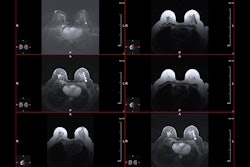
The biological mechanism linking heart and brain toxicity during chemotherapy remains unclear, they explained. To address the knowledge gap, they conducted a study that included pre- and post-treatment heart–brain MRI exams to track structural and functional changes in 85 breast cancer patients undergoing neoadjuvant chemotherapy. Eighteen patients developed CTRCD, while 67 did not.
The investigators reported significant differences in neurological outcomes between the two groups -- for example, a mean reduction in total brain volume nearly 25 times greater in patients with CTRCD compared to those without cardiac dysfunction (-15.7 cm³ versus -0.6 cm³, p < 0.001).
They also found that gray matter and white matter volumes declined significantly more in the CTRCD group than in the group without cardiac dysfunction (p-values: 0.004 and 0.008, respectively). Finally, the researchers quantified cardiac burden via a composite cardiotoxicity factor (FAC) that consisted of multiple heart MRI parameters (with lower FAC scores reflecting worse cardiac function). They reported that, in patients with CTRCD, FAC scores were strongly associated with greater brain volume loss across total, gray matter, and white matter measures, with beta coefficients ranging from -0.752 to -0.792.
The results suggest a systemic effect of chemotherapy-induced cardiac compromise on cerebral perfusion and structure and could influence how oncology teams monitor patients during treatment.
"Cardiotoxicity and neurotoxicity in patients with breast cancer undergoing neoadjuvant chemotherapy should be monitored simultaneously, as these two conditions may be interrelated comorbidities," the authors concluded.
Access the full study here.
.fFmgij6Hin.png?auto=compress%2Cformat&fit=crop&h=100&q=70&w=100)


.fFmgij6Hin.png?auto=compress%2Cformat&fit=crop&h=167&q=70&w=250)


