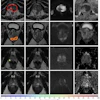
Menlo Park, CA-based Subtle Medical has received U.S. Food and Drug Administration (FDA) clearance for SubtleSynth, AI software that uses deep learning to generate synthetic STIR images from already-acquired MRI T1- and T2-weighted contrasts.
SubtleSynth was validated for use in the spine and is complementary to Subtle's FDA-cleared and vendor-neutral SubtleMR software. SubtleSynth creates synthetic short tau inversion recovery (STIR) images with zero acquisition time that are interchangeable with conventionally acquired STIR images, the company said.
In addition, Subtle said it was recently awarded a $2.3 million Small Business Innovation Research grant from the National Institutes of Health to apply the SubtleSynth technology to brain and musculoskeletal imaging in future releases.




![Overview of the study design. (A) The fully automated deep learning framework was developed to estimate body composition (BC) (defined as subcutaneous adipose tissue [SAT] in liters; visceral adipose tissue [VAT] in liters; skeletal muscle [SM] in liters; SM fat fraction [SMFF] as a percentage; and intramuscular adipose tissue [IMAT] in deciliters) from MRI. The fully automated framework comprised one model (model 1) to quantify different BC measures (SAT, VAT, SM, SMFF, and IMAT) as three-dimensional (3D) measures from whole-body MRI scans. The second model (model 2) was trained to identify standardized anatomic landmarks along the craniocaudal body axis (z coordinate field), which allowed for subdividing the whole-body measures into different subregions typically examined on clinical routine MRI scans (chest, abdomen, and pelvis). (B) BC was quantified from whole-body MRI in over 66,000 individuals from two large population-based cohort studies, the UK Biobank (UKB) (36,317 individuals) and the German National Cohort (NAKO) (30,291 individuals). Bar graphs show age distribution by sex and cohort. BMI = body mass index. (C) After the performance assessment of the fully automated framework, the change in BC measures, distributions, and profiles across age decades were investigated. Age-, sex-, and height-adjusted body composition reference curves were calculated and made publicly available in a web-based z-score calculator (https://circ-ml.github.io).](https://img.auntminnie.com/mindful/smg/workspaces/default/uploads/2026/05/body-comp.XgAjTfPj1W.jpg?auto=format%2Ccompress&fit=crop&h=112&q=70&w=112)