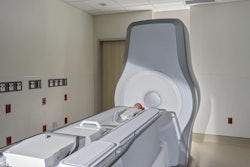

Eyas Medical Imaging is highlighting the first installation of its neonatal MRI system Ascent within Cincinatti Children's Hospital's neonatal intensive care unit (NICU).
The system is not yet cleared by the U.S. Food and Drug Administration (FDA) for commercial use in the U.S. The company said it selected the hospital to conduct research studies involving Ascent. Eyas said it hopes to apply for 510(k) clearance in the future.
The Ascent uses a 3-tesla magnet, which translates to improved accuracy in neonatal diagnostic imaging, which in turn could lead to improved patient treatment plans and outcomes for vulnerable infants, according to the firm. The system can also be installed directly within the neonatal unit, eliminating the challenge of transporting fragile newborns.
Eyas said that pending FDA clearance, the Ascent system will provide infants the same access and care standards that adults currently have with MRI exams. Incoming CEO Matt Storer will lead efforts to obtain such clearance. Storer was previously an executive with Procter & Gamble and is an executive in residence for CincyTech, which led seed-stage financing for Eyas.



![Overview of the study design. (A) The fully automated deep learning framework was developed to estimate body composition (BC) (defined as subcutaneous adipose tissue [SAT] in liters; visceral adipose tissue [VAT] in liters; skeletal muscle [SM] in liters; SM fat fraction [SMFF] as a percentage; and intramuscular adipose tissue [IMAT] in deciliters) from MRI. The fully automated framework comprised one model (model 1) to quantify different BC measures (SAT, VAT, SM, SMFF, and IMAT) as three-dimensional (3D) measures from whole-body MRI scans. The second model (model 2) was trained to identify standardized anatomic landmarks along the craniocaudal body axis (z coordinate field), which allowed for subdividing the whole-body measures into different subregions typically examined on clinical routine MRI scans (chest, abdomen, and pelvis). (B) BC was quantified from whole-body MRI in over 66,000 individuals from two large population-based cohort studies, the UK Biobank (UKB) (36,317 individuals) and the German National Cohort (NAKO) (30,291 individuals). Bar graphs show age distribution by sex and cohort. BMI = body mass index. (C) After the performance assessment of the fully automated framework, the change in BC measures, distributions, and profiles across age decades were investigated. Age-, sex-, and height-adjusted body composition reference curves were calculated and made publicly available in a web-based z-score calculator (https://circ-ml.github.io).](https://img.auntminnie.com/mindful/smg/workspaces/default/uploads/2026/05/body-comp.XgAjTfPj1W.jpg?auto=format%2Ccompress&fit=crop&h=112&q=70&w=112)