Bayer HealthCare Pharmaceuticals of Wayne, NJ, has received clearance from the U.S. Food and Drug Administration (FDA) for its gadolinium-based contrast agent, Eovist (gadoxetate disodium).
Eovist is approved for intravenous use in T1-weighted MRI of the liver to detect and characterize lesions in adults with known or suspected focal liver disease.
Eovist is marketed by Bayer HealthCare affiliates outside the U.S. as Primovist and in Japan as EOB Primovist. It was first approved in 2004 in Europe. With this FDA decision, Eovist now is approved in more than 40 countries.
The paramagnetic MRI contrast agent combines features of an extracellular contrast agent and a hepatocyte-specific agent. Eovist is administered via an intravenous bolus injection and has a dual route of excretion, with approximately 50% eliminated through the liver and 50% eliminated through the kidney.
Related Reading
Bayer awarded Amerinet deal, April 14, 2008
Bayer announces ship date for VistaTrak, March 13, 2008
Bayer inks molecular imaging deal, February 20, 2008
Bayer launches VistaTrak at RSNA show, December 3, 2007
Bayer HealthCare secures 3-year MRI contract, November 9, 2007
Copyright © 2008 AuntMinnie.com



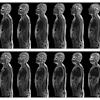
![Overview of the study design. (A) The fully automated deep learning framework was developed to estimate body composition (BC) (defined as subcutaneous adipose tissue [SAT] in liters; visceral adipose tissue [VAT] in liters; skeletal muscle [SM] in liters; SM fat fraction [SMFF] as a percentage; and intramuscular adipose tissue [IMAT] in deciliters) from MRI. The fully automated framework comprised one model (model 1) to quantify different BC measures (SAT, VAT, SM, SMFF, and IMAT) as three-dimensional (3D) measures from whole-body MRI scans. The second model (model 2) was trained to identify standardized anatomic landmarks along the craniocaudal body axis (z coordinate field), which allowed for subdividing the whole-body measures into different subregions typically examined on clinical routine MRI scans (chest, abdomen, and pelvis). (B) BC was quantified from whole-body MRI in over 66,000 individuals from two large population-based cohort studies, the UK Biobank (UKB) (36,317 individuals) and the German National Cohort (NAKO) (30,291 individuals). Bar graphs show age distribution by sex and cohort. BMI = body mass index. (C) After the performance assessment of the fully automated framework, the change in BC measures, distributions, and profiles across age decades were investigated. Age-, sex-, and height-adjusted body composition reference curves were calculated and made publicly available in a web-based z-score calculator (https://circ-ml.github.io).](https://img.auntminnie.com/mindful/smg/workspaces/default/uploads/2026/05/body-comp.XgAjTfPj1W.jpg?auto=format%2Ccompress&fit=crop&h=112&q=70&w=112)