Cardiac MRI coil developer Magna-Lab has received Food and Drug Administration 510(k) clearance for its Cardiac View surface coil. The MRI receiver coil is placed on the surface of the patient's chest. It's designed to facilitate MRI of the heart and associated thoracic structures, according to the Syosset, NY-based firm.
The surface coil can be used alone or in tandem with the vendor's Cardiac View probe, a transesophageal receiving coil designed to aid in the imaging of the aortic arch, the descending aorta, and the coronary vessels of the heart. When used together, Magna-Lab says the two products effectively surround the heart, allowing additional imaging information to be generated.
By AuntMinnie.com staff writersJune 13, 2001
Related Reading
Magna-Lab stabilizes loss in fiscal 2001, May 29, 2001
Magna-Lab gets clearance for Cardiac View, May 23, 2001
Magna-Lab submits 510(k) for Cardiac View surface coil, March 20, 2001
Magna-Lab retains Covance, March 7, 2001
Copyright © 2001 AuntMinnie.com
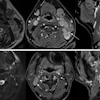


![Overview of the study design. (A) The fully automated deep learning framework was developed to estimate body composition (BC) (defined as subcutaneous adipose tissue [SAT] in liters; visceral adipose tissue [VAT] in liters; skeletal muscle [SM] in liters; SM fat fraction [SMFF] as a percentage; and intramuscular adipose tissue [IMAT] in deciliters) from MRI. The fully automated framework comprised one model (model 1) to quantify different BC measures (SAT, VAT, SM, SMFF, and IMAT) as three-dimensional (3D) measures from whole-body MRI scans. The second model (model 2) was trained to identify standardized anatomic landmarks along the craniocaudal body axis (z coordinate field), which allowed for subdividing the whole-body measures into different subregions typically examined on clinical routine MRI scans (chest, abdomen, and pelvis). (B) BC was quantified from whole-body MRI in over 66,000 individuals from two large population-based cohort studies, the UK Biobank (UKB) (36,317 individuals) and the German National Cohort (NAKO) (30,291 individuals). Bar graphs show age distribution by sex and cohort. BMI = body mass index. (C) After the performance assessment of the fully automated framework, the change in BC measures, distributions, and profiles across age decades were investigated. Age-, sex-, and height-adjusted body composition reference curves were calculated and made publicly available in a web-based z-score calculator (https://circ-ml.github.io).](https://img.auntminnie.com/mindful/smg/workspaces/default/uploads/2026/05/body-comp.XgAjTfPj1W.jpg?auto=format%2Ccompress&fit=crop&h=112&q=70&w=112)