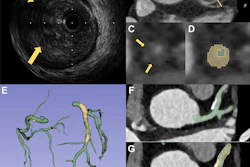
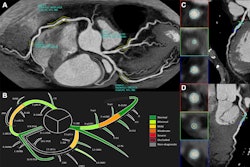
The American College of Cardiology (ACC) has released a new scientific statement and consensus recommendation about quantitative coronary plaque analysis, according to a report published December 17 in JACC: Cardiovascular Imaging.
A group led by Yellapragada Chandrashekhar, MD, of the University of Minnesota in Minneapolis, noted that research has focused on the accuracy, prognostic value, and decision-making impact of quantitative coronary plaque analysis (QCPA), but there has been no current consensus on QCPA-appropriate use in clinical practice.
Importantly, the new guidance outlines clinical indications, methods for interpretation and reporting, reporting elements recommended for both physicians and vendors, and standardization of QCPA, as well as best practices for interpreting AI-enabled plaque quantification.
The team also recommended that vendors strive to develop standardized QCPA algorithms that account for differences in kVp, detector type, and reconstruction parameters when reporting QCPA results.
The paper responds to technological advances in coronary CT angiography and artificial intelligence. It is intended for cardiologists who use QCPA in clinical practice and cardiovascular imagers who may interpret and report this information, according to Chandrashekhar and colleagues.
Read the complete paper here.

![Images show the pectoralis muscles of a healthy male individual who never smoked (age, 66 years; height, 178 cm; body mass index [BMI, calculated as weight in kilograms divided by height in meters squared], 28.4; number of cigarette pack-years, 0; forced expiratory volume in 1 second [FEV1], 97.6% predicted; FEV1: forced vital capacity [FVC] ratio, 0.71; pectoralis muscle area [PMA], 59.4 cm2; pectoralis muscle volume [PMV], 764 cm3) and a male individual with a smoking history and chronic obstructive pulmonary disorder (COPD) (age, 66 years; height, 178 cm; BMI, 27.5; number of cigarette pack-years, 43.2, FEV1, 48% predicted; FEV1:FVC, 0.56; PMA, 35 cm2; PMV, 480.8 cm3) from the Canadian Cohort Obstructive Lung Disease (i.e., CanCOLD) study. The CT image is shown in the axial plane. The PMV is automatically extracted using the developed deep learning model and overlayed onto the lungs for visual clarity.](https://img.auntminnie.com/mindful/smg/workspaces/default/uploads/2026/03/genkin.25LqljVF0y.jpg?auto=format%2Ccompress&crop=focalpoint&fit=crop&h=100&q=70&w=100)


![Images show the pectoralis muscles of a healthy male individual who never smoked (age, 66 years; height, 178 cm; body mass index [BMI, calculated as weight in kilograms divided by height in meters squared], 28.4; number of cigarette pack-years, 0; forced expiratory volume in 1 second [FEV1], 97.6% predicted; FEV1: forced vital capacity [FVC] ratio, 0.71; pectoralis muscle area [PMA], 59.4 cm2; pectoralis muscle volume [PMV], 764 cm3) and a male individual with a smoking history and chronic obstructive pulmonary disorder (COPD) (age, 66 years; height, 178 cm; BMI, 27.5; number of cigarette pack-years, 43.2, FEV1, 48% predicted; FEV1:FVC, 0.56; PMA, 35 cm2; PMV, 480.8 cm3) from the Canadian Cohort Obstructive Lung Disease (i.e., CanCOLD) study. The CT image is shown in the axial plane. The PMV is automatically extracted using the developed deep learning model and overlayed onto the lungs for visual clarity.](https://img.auntminnie.com/mindful/smg/workspaces/default/uploads/2026/03/genkin.25LqljVF0y.jpg?auto=format%2Ccompress&crop=focalpoint&fit=crop&h=112&q=70&w=112)