Cleerly is highlighting clinical results presented at the American Heart Association meeting that suggest that its AI-guided quantitative coronary CT angiography (AI-QCT) ischemia algorithm improves cardiovascular risk prediction.
The research was conducted by a team led by Ibrahim Danad, MD, PhD, of the Amsterdam University Medical Center in the Netherlands. It included 6,550 patients who underwent coronary CT angiography over four years with AI-QCT. Adding the algorithm to European Society of Cardiology Risk Factor-weighted Clinical Likelihood scores improved the area under the receiver operating curve measure regarding prediction of major adverse cardiovascular events from 0.62 to 0.75 (p < 0.001) and death/myocardial infarction from 0.6 to 0.71 (p < 0.001), Cleerly said.


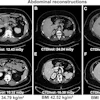





![Axial images from unenhanced calcium score cardiac CT (left) and curved planar reformation images from CT angiography (right) show that higher long-term exposure to air pollution is associated with greater coronary artery calcium and more obstructive coronary artery disease (CAD). Top row: Images in a 68-year-old male patient with higher 10-year mean ambient air pollution exposure (7.9 μg/m3 for particulate matter measuring ≤2.5 μm in diameter [PM2.5] and 17.4 parts per billion [ppb] for NO2) with extensive CAD (coronary artery calcium score [CACS] >1,000 and obstructive CAD [≥70% diameter stenosis]). Bottom row: Images in a 57-year-old female patient with lower 10-year mean ambient air pollution exposure (6.3 μg/m3 for PM2.5 and 4.6 ppb for NO2) with no CAD (CACS = 0 and no obstructive stenosis).](https://img.auntminnie.com/mindful/smg/workspaces/default/uploads/2026/06/hanneman.r6SMLzkezo.png?auto=format%2Ccompress&fit=crop&h=112&q=70&w=112)


