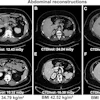
A novel AI algorithm can detect osteoporotic vertebral CT fractures on routine lumbar CT exams with a high degree of accuracy, according to research published June 23 in the Journal of Imaging Informatics in Medicine.
The study showed that AI-enabled opportunistic screening has the potential to close current diagnostic gaps and support earlier and more-targeted interventions in osteoporosis care, according to a team led by first author Dr. Magdalena Seng and co-senior authors Martin Segeroth and Dr. Hanns-Christian Breit of the University Hospital Basel in Switzerland.
“Automated opportunistic analysis of routine CT scans integrating vertebral fracture detection, trabecular attenuation and paraspinal muscle metrics improves identification of patients with fragility fractures and may support earlier osteoporosis risk stratification beyond density-based assessment alone,” the authors wrote.
A substantial proportion of patients at high risk for vertebral fractures remain unrecognized as they don’t meet the conventional bone mineral density threshold for osteoporosis. What’s more, attenuation-based measures alone fail to fully capture fracture susceptibility, according to the researchers.
In an effort to improve on the limitations of density-based assessment alone, the group developed an automated algorithm for vertebral fracture detection based on the open-source TotalSegmentator software. Next, they applied their tool to 1,209 CT exams that included the lumbar spine to identify patients with osteoporotic vertebral fractures.
Of the 1,209 CT exams in the study, 678 had at least one vertebral fracture and 477 were negative. The researchers improved the initial performance of the tool by integrating vertebral attenuation with paraspinal muscle volume and attenuation into a multiparametric model.
The final combined model yielded an area under the curve (AUC) of 0.83, 58% sensitivity, and 95% specificity for predicting vertebral fractures. The researchers observed that the most relevant predictor in their model was the mean attenuation of all non-fractured lumbar vertebrae, followed by the individual vertebral attenuations.
“The algorithm performed well at both the examination and vertebral level, demonstrating that structural deformities can be identified consistently without manual measurements,” they wrote.
The authors noted that further validation of their automated pipeline is now required ln larger, multicenter cohorts and across contrast phases.
“Density thresholds in contrast-enhanced CT can be adjusted, as shown previously, suggesting that opportunistic screening may remain feasible across broader imaging contexts,” the authors wrote. “Future work may also consider integration into PACS/RIS systems and prospective studies linking CT-derived biomarkers to incident fractures will be essential to confirm clinical utility.”
The full article can be found here.