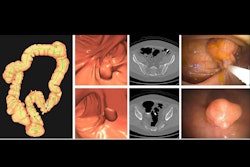
In this conversation with AuntMinnie, Perry Pickhardt, MD, of the University of Wisconsin in Madison, offers an overview of the important role CT colonography (CTC) can play in screening for colorectal cancer -- addressing the question of why the procedure has not been used to its full potential and how the Centers for Medicare and Medicaid Services' (CMS) decision last year to reimburse for it may be reversing that trend.
In July, Pickhardt and colleagues published a paper that outlined the University of Wisconsin's CTC program over two decades and tracked use rates. In the interview, Pickhardt underscored that use of the procedure has faced "headwinds" -- not only from the fact that the lack of Medicare coverage prior to Jan 2025 had given CTC an "investigational feel," but also from concerns about radiation dose and extracolonic findings.
Pickhardt characterizes CTC as the "best kept secret in medicine" and as a "Goldilocks test" -- that is, an effective middle ground between colonoscopy, which offers prevention but is invasive, and stool-based testing, which is less invasive but doesn't offer much prevention. He also noted that, when it comes to CTC, radiologists may be their own "worst enemy," perhaps due to a reluctance to incorporate the procedure into their practice because of the additional time it takes not only to read the exam but to establish a screening program that prepares patients for the test and tracks them via a nurse coordinator.
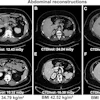
In any case, CTC has the potential to offer significant added value, according to Pickhardt, since it can provide "rich cardiometabolic information" -- from assessing for osteoporosis, sarcopenia, fatty liver, and diabetes to determining biological age.
"If we revisit CTC screening with its added value in mind, that gives me a lot of hope that people will want this exam," he said.