Philips has begun enrolling the first patients in a clinical trial that will test a direct-to-angio-suite stroke protocol.
The trial, called We-Trust, will be conducted in the U.S. and France, and will assess whether a direct-to-angio-suite workflow can improve outcomes for early time-window stroke patients, comparing those results to the conventional diagnostic MR/CT scan method.
The Bicêtre Hospital in Paris successfully recruited the first French patient in the trial, while the Baptist Stroke & Cerebrovascular Center in Jacksonville, FL, also successfully enrolled the first patient in the U.S. The trial is currently running in several European and South American countries including Spain, Turkey, Germany, Brazil, the Netherlands, Argentina, and France.
The first patient treated in France had a severe stroke and arrived directly at the Bicêtre Hospital, going straight to the angio suite. Philips reported that within 30 minutes, the procedure to remove the blood clot in the brain was started and the patient's condition improved "significantly."
The procedure is guided by a cone-beam CT imaging tool already integrated into interventional angio suite systems such as Philips' Azurion system. The company earlier this year highlighted via an economic analysis report that its direct-to-angio system can save more than $3,000 per stroke patient.



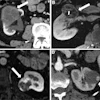
![Images show the pectoralis muscles of a healthy male individual who never smoked (age, 66 years; height, 178 cm; body mass index [BMI, calculated as weight in kilograms divided by height in meters squared], 28.4; number of cigarette pack-years, 0; forced expiratory volume in 1 second [FEV1], 97.6% predicted; FEV1: forced vital capacity [FVC] ratio, 0.71; pectoralis muscle area [PMA], 59.4 cm2; pectoralis muscle volume [PMV], 764 cm3) and a male individual with a smoking history and chronic obstructive pulmonary disorder (COPD) (age, 66 years; height, 178 cm; BMI, 27.5; number of cigarette pack-years, 43.2, FEV1, 48% predicted; FEV1:FVC, 0.56; PMA, 35 cm2; PMV, 480.8 cm3) from the Canadian Cohort Obstructive Lung Disease (i.e., CanCOLD) study. The CT image is shown in the axial plane. The PMV is automatically extracted using the developed deep learning model and overlayed onto the lungs for visual clarity.](https://img.auntminnie.com/mindful/smg/workspaces/default/uploads/2026/03/genkin.25LqljVF0y.jpg?auto=format%2Ccompress&crop=focalpoint&fit=crop&h=100&q=70&w=100)


![Images show the pectoralis muscles of a healthy male individual who never smoked (age, 66 years; height, 178 cm; body mass index [BMI, calculated as weight in kilograms divided by height in meters squared], 28.4; number of cigarette pack-years, 0; forced expiratory volume in 1 second [FEV1], 97.6% predicted; FEV1: forced vital capacity [FVC] ratio, 0.71; pectoralis muscle area [PMA], 59.4 cm2; pectoralis muscle volume [PMV], 764 cm3) and a male individual with a smoking history and chronic obstructive pulmonary disorder (COPD) (age, 66 years; height, 178 cm; BMI, 27.5; number of cigarette pack-years, 43.2, FEV1, 48% predicted; FEV1:FVC, 0.56; PMA, 35 cm2; PMV, 480.8 cm3) from the Canadian Cohort Obstructive Lung Disease (i.e., CanCOLD) study. The CT image is shown in the axial plane. The PMV is automatically extracted using the developed deep learning model and overlayed onto the lungs for visual clarity.](https://img.auntminnie.com/mindful/smg/workspaces/default/uploads/2026/03/genkin.25LqljVF0y.jpg?auto=format%2Ccompress&crop=focalpoint&fit=crop&h=112&q=70&w=112)