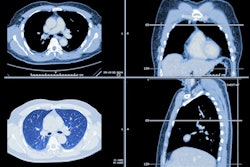
Lung cancer screening with low-dose CT reduces mortality rates by finding cancer earlier, according to a study published December 17 in JAMA Network Open.
A team led by Dr. Raja Flores of Mount Sinai Health System in New York City analyzed data from 312,382 patients with non-small cell lung cancer from between 2006 and 2016; data was taken from the Surveillance, Epidemiology, and End Results (SEER) program.
The group found that lung cancer deaths decreased by about 4% per year, due to earlier detection of disease. Early-stage diagnosis increased from 26.5% to 31.2% over the study period, while late-stage diagnoses decreased from 70.8% to 66.1%.
"These findings ... seem to suggest that awareness of CT lung cancer screening is associated with an earlier detection of non-small cell lung cancer, but unfortunately, patient adherence to the USPSTF guidance on lung cancer screening with low-dose CT remains low, at around 5% of those people who meet the criteria," study co-author Dr. Emanuela Taioli, PhD, also of Mount Sinai, said in a statement released by the hospital. "That means that we cannot only attribute CT screening to decreased mortality, but our findings reinforce the importance of screening in the early detection, intervention, and effective treatment of cancer."