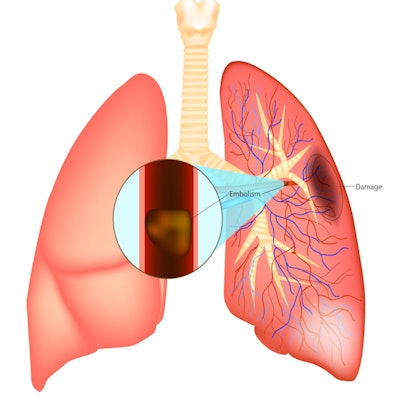
Racial disparities exist when it comes to pulmonary embolism (PE) caused by COVID-19, according to research presented Wednesday afternoon at the RSNA 2021 meeting.
A team led by presenter Dr. Brandon Metra of Thomas Jefferson University found that Black COVID-19 patients were more likely than their white counterparts to develop pulmonary embolism, even after controlling for sociodemographic and clinical variables such as hypertension, diabetes, and obesity.
Pulmonary embolism is a common complication of COVID-19, the researchers noted. They sought to assess whether there are racial disparities in COVID-19-associated PE, using data from TriNetX, a research network that includes electronic health records from more than 73 million patients around the world. The team extracted data regarding adults with COVID-19 between January and September 2020, tracking clinical outcomes by race, with the primary outcome being developing PE or dying within 30 days of diagnosis.
Of 346,953 patients with COVID-19, 3,879 developed pulmonary embolism (1.18%), the researchers found. Out of the total cohort, 157,049 patients were white and 50,376 were Black. The investigators discovered that Black patients had a higher risk of mortality and PE compared to their white counterparts, and those with both COVID-19 and pulmonary embolism had a higher rate of 30-day mortality compared to white patients.
"Clinicians should consider racial disparities in the surveillance and management of pulmonary embolism associated with COVID-19," the group concluded.