The Society of Cardiovascular Computed Tomography (SCCT) published a new consensus document on coronary CT angiography (CTA) in the Journal of Cardiovascular Computed Tomography.
The group recommends using coronary CTA as a prognostic risk tool for stable patients with chest pain while recognizing the technique is lacking in specificity and positive predictive accuracy. These factors led to the development of value-added coronary CTA strategies including fractional flow reserve derived from CT and CT perfusion.
Updated recommendations are listed for evaluating for stable coronary artery disease using the following techniques:
- Coronary CTA in native vessels
- Coronary CTA post revascularization
- Coronary CTA with fractional flow reserve or CT perfusion
- Coronary CTA in other conditions

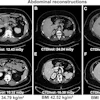




![Images show the pectoralis muscles of a healthy male individual who never smoked (age, 66 years; height, 178 cm; body mass index [BMI, calculated as weight in kilograms divided by height in meters squared], 28.4; number of cigarette pack-years, 0; forced expiratory volume in 1 second [FEV1], 97.6% predicted; FEV1: forced vital capacity [FVC] ratio, 0.71; pectoralis muscle area [PMA], 59.4 cm2; pectoralis muscle volume [PMV], 764 cm3) and a male individual with a smoking history and chronic obstructive pulmonary disorder (COPD) (age, 66 years; height, 178 cm; BMI, 27.5; number of cigarette pack-years, 43.2, FEV1, 48% predicted; FEV1:FVC, 0.56; PMA, 35 cm2; PMV, 480.8 cm3) from the Canadian Cohort Obstructive Lung Disease (i.e., CanCOLD) study. The CT image is shown in the axial plane. The PMV is automatically extracted using the developed deep learning model and overlayed onto the lungs for visual clarity.](https://img.auntminnie.com/mindful/smg/workspaces/default/uploads/2026/03/genkin.25LqljVF0y.jpg?auto=format%2Ccompress&crop=focalpoint&fit=crop&h=112&q=70&w=112)


