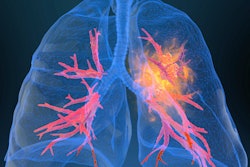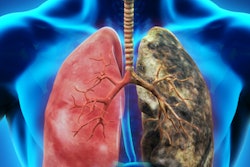
An artificial intelligence (AI) neural network used with lung CT scans can help clinicians assess cancer severity and develop treatment options, according to research conducted by a team from Stanford University.
A group led by Olivier Gevaert, PhD, created a neural network called LungNet to gather lung cancer information from CT scans, particularly those from adults with non-small cell lung cancer (NSCLC), which represents the majority of diagnoses of the disease.
The group trained the network on four patient cohorts with NSCLC from four medical centers. LungNet accurately predicted overall survival in all four patient groups, accurately categorized benign and malignant nodules, and it further classified nodules according to cancer progression, according to the researchers.
"LungNet demonstrates the benefits of designing and training machine learning tools directly on medical images from patients," contributing author Qi Duan, PhD, said in a statement released on June 24 by the National Institute of Biomedical Imaging and Bioengineering (NIBIB), which funded the research. "This is an outstanding example of how machine-learning technology can be a cost-effective approach to advance disease detection, diagnosis, and treatment."