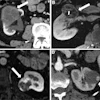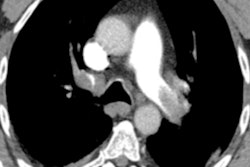
Researchers have found that COVID-19 is "more than a lung infection." Patients with the disease also have a higher risk of thrombosis, according to a study and two research letters published April 23 in Radiology.
The findings put into context clinical reports that have shown a strong association between high D-dimer levels and poor prognosis in patients with COVID-19, corresponding author Dr. Edwin van Beek, PhD, of the University of Edinburgh in the U.K., said in a statement released by the RSNA.
"From the analysis of all available current medical, laboratory, and imaging data on COVID-19, it [has become] clear that symptoms and diagnostic tests [cannot] be explained by impaired pulmonary ventilation alone," he said.
Since microvascular blood clotting processes appear to be involved in COVID-19, van Beek's group conducted a literature review to identify how best to work up, prevent, and treat thromboembolic complications caused by COVID-19.
The team listed the following recommendations in treating patients with COVID-19:
- Prophylactic-dose low-molecular-weight heparin should be given to all patients admitted to the hospital with suspected COVID-19.
- Clinicians should perform a baseline, noncontrast chest CT in all patients with suspected COVID-19 indicated for hospital admission.
- In patients with suspected COVID-19 as well as a high suspicion for pulmonary embolism (PE), clinicians should administer CT pulmonary angiography if the person has elevated D-dimer levels.
- Patients with COVID-19 admitted to the hospital should have D-dimer testing on admission and throughout their stay.
"Imaging and pathological investigations confirmed the COVID-19 syndrome is a thrombo-inflammatory process that initially affects lung perfusion, but consecutively affects all organs of the body," van Beek said. "Therefore, strict thrombosis prophylaxis, close laboratory and appropriate imaging monitoring with early anticoagulant therapy in case of suspected venous thromboembolism are indicated."
Two accompanying research letters supported the recommendations of van Beek and colleagues. A team led by Dr. Franck Grillet of Centre Hospitalier Universitaire de Besançon found that 23% of COVID-19 patients who underwent contrast CT had PE and that these patients were more likely to require critical care (74%) and mechanical ventilation (65%). The findings led Grillet's group to conclude that "patients with severe clinical features of COVID-19 may have associated acute pulmonary embolus."
In the second letter, Dr. Ian Leonard-Lorant of Hôpitaux Universitaires de Strasbourg in France reported that, of 106 pulmonary CT angiograms administered to COVID-19 patients, 30% showed acute PE -- a much higher rate than usually found in critically ill patients without the disease (1.3%) or in emergency department patients (3% to 10%). Patients with COVID-19 infection and PE also had higher D-dimer levels than those without PE (6,110 µg/L compared with 1,920 µg/L).
COVID-19's blood clotting risk must be taken into consideration, van Beek said in the RSNA statement.
"[COVID-19] affects the vasculature of the lungs and other organs and has a high thrombosis risk with acute life-threatening events that require adequate treatment with anticoagulants based on laboratory monitoring with appropriate imaging tests as required," he said.