
Canon Medical Systems USA has received U.S. Food and Drug Administration (FDA) 510(k) clearance for its artificial intelligence (AI)-based Advanced Intelligent Clear-IQ Engine (AiCE) image reconstruction technology.
First introduced at RSNA 2018, AiCE employs a deep convolutional neural network to suppress noise and enhance signal, according to the firm. It can reconstruct CT images with better spatial resolution than the company's adaptive iterative dose reduction (AIDR) 3D iterative reconstruction protocol and at a rate three to five times faster than traditional model-based iterative reconstruction (MBIR) methods, Canon said.



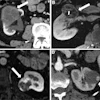





![Axial images from unenhanced calcium score cardiac CT (left) and curved planar reformation images from CT angiography (right) show that higher long-term exposure to air pollution is associated with greater coronary artery calcium and more obstructive coronary artery disease (CAD). Top row: Images in a 68-year-old male patient with higher 10-year mean ambient air pollution exposure (7.9 μg/m3 for particulate matter measuring ≤2.5 μm in diameter [PM2.5] and 17.4 parts per billion [ppb] for NO2) with extensive CAD (coronary artery calcium score [CACS] >1,000 and obstructive CAD [≥70% diameter stenosis]). Bottom row: Images in a 57-year-old female patient with lower 10-year mean ambient air pollution exposure (6.3 μg/m3 for PM2.5 and 4.6 ppb for NO2) with no CAD (CACS = 0 and no obstructive stenosis).](https://img.auntminnie.com/mindful/smg/workspaces/default/uploads/2026/06/hanneman.r6SMLzkezo.png?auto=format%2Ccompress&fit=crop&h=112&q=70&w=112)


