White men in the U.S. have significantly higher progression of coronary artery calcium (CAC) than Japanese men, according to research published online February 14 in Circulation: Cardiovascular Imaging.
A group of researchers led by Dr. Takashi Hisamatsu of Northwestern University examined the incidence and progression of CAC in the 1,712 men who participated in the U.S. Multi-Ethnic Study of Atherosclerosis (MESA) and in the 697 men who participated in the Shia Epidemiological Study of Subclinical Atherosclerosis (SESSA) in Japan. CAC progression was quantified by serial CT exams, which were performed at a median of 3.4 years per scan for MESA and 5.2 years for SESSA.
After adjusting for known heart disease risk factors, the researchers found that the later incidence of CAC among men who had been initially free of CAC at baseline was highest among white men in the U.S., at 35.2%, followed by Japanese men, at 29.2%.
As for those who had detectable CAC at baseline, the annual increase in CT CAC score was also highest for white men in the U.S., at 39.4, but lowest for Japanese men, at 15.9, among all races in the study. What's more, men of all races and ethnic backgrounds in the U.S. had higher increases in existing CAC than the Japanese men.
"These results suggest a higher coronary atherosclerosis burden and consequent risk for coronary heart disease among the U.S. men as compared with Japanese men in Japan," the authors wrote. "Explanations responsible for these differences should be sought, which may inform clinical interpretation and our understanding of the pathophysiology of coronary atherosclerosis."
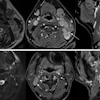
![Images show the pectoralis muscles of a healthy male individual who never smoked (age, 66 years; height, 178 cm; body mass index [BMI, calculated as weight in kilograms divided by height in meters squared], 28.4; number of cigarette pack-years, 0; forced expiratory volume in 1 second [FEV1], 97.6% predicted; FEV1: forced vital capacity [FVC] ratio, 0.71; pectoralis muscle area [PMA], 59.4 cm2; pectoralis muscle volume [PMV], 764 cm3) and a male individual with a smoking history and chronic obstructive pulmonary disorder (COPD) (age, 66 years; height, 178 cm; BMI, 27.5; number of cigarette pack-years, 43.2, FEV1, 48% predicted; FEV1:FVC, 0.56; PMA, 35 cm2; PMV, 480.8 cm3) from the Canadian Cohort Obstructive Lung Disease (i.e., CanCOLD) study. The CT image is shown in the axial plane. The PMV is automatically extracted using the developed deep learning model and overlayed onto the lungs for visual clarity.](https://img.auntminnie.com/mindful/smg/workspaces/default/uploads/2026/03/genkin.25LqljVF0y.jpg?auto=format%2Ccompress&crop=focalpoint&fit=crop&h=100&q=70&w=100)


![Images show the pectoralis muscles of a healthy male individual who never smoked (age, 66 years; height, 178 cm; body mass index [BMI, calculated as weight in kilograms divided by height in meters squared], 28.4; number of cigarette pack-years, 0; forced expiratory volume in 1 second [FEV1], 97.6% predicted; FEV1: forced vital capacity [FVC] ratio, 0.71; pectoralis muscle area [PMA], 59.4 cm2; pectoralis muscle volume [PMV], 764 cm3) and a male individual with a smoking history and chronic obstructive pulmonary disorder (COPD) (age, 66 years; height, 178 cm; BMI, 27.5; number of cigarette pack-years, 43.2, FEV1, 48% predicted; FEV1:FVC, 0.56; PMA, 35 cm2; PMV, 480.8 cm3) from the Canadian Cohort Obstructive Lung Disease (i.e., CanCOLD) study. The CT image is shown in the axial plane. The PMV is automatically extracted using the developed deep learning model and overlayed onto the lungs for visual clarity.](https://img.auntminnie.com/mindful/smg/workspaces/default/uploads/2026/03/genkin.25LqljVF0y.jpg?auto=format%2Ccompress&crop=focalpoint&fit=crop&h=112&q=70&w=112)