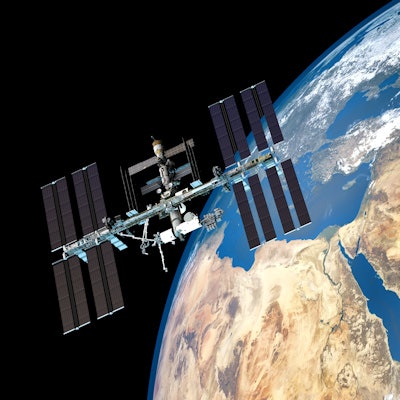
Prolonged time in space can have a measurable effect on muscle size and composition, according to researchers from the Massachusetts Institute of Technology (MIT). An MIT group analyzed CT scans of astronauts who spent months on the International Space Station to document muscle changes.
Previous studies have already investigated ways in which prolonged space flight may affect astronauts. In fact, in earlier research, astronauts used ultrasound scanners on the space station to scan each other as part of an effort to assess musculoskeletal changes during space flight.
In the current study, published December 8 in Spine, the team led by Katelyn Burkhart analyzed CT scans of the lumbar spine in astronauts and cosmonauts who spent an average duration of six months in space, with the goal of determining the effects on paraspinal muscles. The subjects were scanned before and after their space missions.
CT images revealed reductions in the size of paraspinal muscles, with muscle size decreasing by 4.6% to 8.8%. Muscle size returned to normal for all paraspinal muscles, according to follow-up CT scans performed one year later.
In addition to the size changes, the composition of muscles also changed in the space travelers, with an increase in fat content. The muscle density of the astronauts decreased by 5.9% to 8.8% (the researchers noted that muscle density is inversely related to fat content). As with muscle size, the composition of most of the paraspinal muscles returned to normal after one year.
However, the composition of two types of muscles -- the quadratus lumborum and psoas muscles -- remained altered two to four years after space flight was completed. These muscles connect the spinal column to the pelvis and are located alongside the spinal column, while paraspinal muscles (which had returned to normal) are located behind the spinal column.
The study indicates that prolonged space flight can cause some muscle changes that persist for years, the researchers concluded. The effect can be mitigated by in-flight exercise, which could be an important consideration for NASA as the space agency considers longer space flights to locations such as Mars.