Tuesday, November 28 | 3:10 p.m.-3:20 p.m. | SSJ22-02 | Room S403B
A major drawback of lowering CT radiation dose is a loss in image quality, but researchers found that microdose CT can deliver high-quality scans with the aid of a deep-learning algorithm.The ongoing efforts of CT researchers and vendors to cut radiation dose using iterative reconstruction have led to reductions of approximately 17% to 44%, according to presenter Amin Zarshenas from the Illinois Institute of Technology in Chicago.
"Not only is this not sufficient, especially for screening, but it also comes at a very high computational cost," study co-author Kenji Suzuki, PhD, told AuntMinnie.com.
To explore other options for reducing CT radiation dose, the researchers turned to deep-learning techniques. They developed a neural network and trained it to enhance image quality by removing noise and artifacts from microdose thin-slice CT scans.
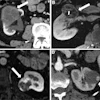
When they applied the neural network to the microdose CT scans of 50 clinical cases, the researchers found that the quantitative evaluation significantly improved image quality (p < 0.5). In effect, this procedure converted extremely low-dose (0.2 mSv) CT images into "virtual" high-dose CT images at a reduction in radiation dose of 97%.
"With our 'virtual' high-dose technology, we solved the two major issues with [iterative reconstruction], and it would make microdose CT screening possible," Suzuki said.