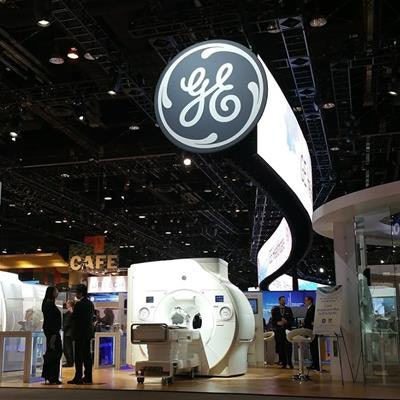
GE Healthcare is introducing a dedicated CT scanner called CardioGraphe at this week's American College of Cardiology (ACC) meeting in Washington, DC.
The result of a partnership between GE and Israel-based cardiac device firm Arineta that began in 2010, the new scanner aims to make noninvasive cardiovascular imaging more affordable in a traditional hospital setting by providing highly detailed cardiac CT imaging in an emergency department or at a physician's point of care.
Capable of imaging the entire heart in a single beat, CardioGraphe creates 3D images of the coronary arteries, valves, chambers, and myocardium, and it can also perform studies of the aorta and carotid arteries, GE said.
An ultrafast rotation speed of 0.24 seconds combined with the firm's SnapShot Freeze intelligent motion correction software stops heart motion even in patients with high or unstable heart rates, according to the company. The technology also provides doctors with functional information and renders the fine anatomic detail needed for procedures such as percutaneous coronary intervention (PCI) and transcatheter aortic valve replacement (TAVR).
In an independent test for image quality and interpretability conducted as part of the product's 510(k) application, 100% of cases were interpretable, with 92.7% rated excellent and 7.3% rated good, said Dr. Matthew Budoff, professor of medicine at the University of California, Los Angeles, in a statement.
CardioGraphe has received 510(k) clearance from the U.S. Food and Drug Administration (FDA) and also the CE Mark for Europe, but it is not available in all regions, GE said.