Dear AuntMinnie Member,
By now you have had time to decompress after RSNA 2015. What better time to take a look back at the conference that was? That's the idea behind today's article listing the top five trends from radiology's showcase meeting.
Our editorial team has synthesized six days of scientific presentations, keynote speeches, and vendor booth visits into a single, comprehensive wrapup that you can read by clicking here.
Does our list match up with what you thought was important? Or did we miss a major trend? As always, drop me a line to let us know.
Changes ahead for OPPS
There are a number of changes of note for radiology practices in the U.S. Centers for Medicare and Medicaid Services (CMS) 2016 final rules for the hospital outpatient prospective payment system (OPPS).
Catherine Huyghe of Panacea Healthcare Solutions shares what you need to know in a column posted in our Imaging Leaders Community. You can access it here, or by visiting the Imaging Leaders Community at leaders.auntminnie.com.
Conjoined twins
We're also highlighting a tragic case report on conjoined twins from our Middle East Community. Contributors Dr. Omar Muayad Sultan and Dr. Ahmed Said Tawfeek shared how the case was diagnosed and managed, as well as lessons to be learned in handling these challenging situations.
Click here for their report or visit our AuntMinnie Middle East special section at me.auntminnie.com.

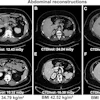
![Images show the pectoralis muscles of a healthy male individual who never smoked (age, 66 years; height, 178 cm; body mass index [BMI, calculated as weight in kilograms divided by height in meters squared], 28.4; number of cigarette pack-years, 0; forced expiratory volume in 1 second [FEV1], 97.6% predicted; FEV1: forced vital capacity [FVC] ratio, 0.71; pectoralis muscle area [PMA], 59.4 cm2; pectoralis muscle volume [PMV], 764 cm3) and a male individual with a smoking history and chronic obstructive pulmonary disorder (COPD) (age, 66 years; height, 178 cm; BMI, 27.5; number of cigarette pack-years, 43.2, FEV1, 48% predicted; FEV1:FVC, 0.56; PMA, 35 cm2; PMV, 480.8 cm3) from the Canadian Cohort Obstructive Lung Disease (i.e., CanCOLD) study. The CT image is shown in the axial plane. The PMV is automatically extracted using the developed deep learning model and overlayed onto the lungs for visual clarity.](https://img.auntminnie.com/mindful/smg/workspaces/default/uploads/2026/03/genkin.25LqljVF0y.jpg?auto=format%2Ccompress&crop=focalpoint&fit=crop&h=100&q=70&w=100)


![Images show the pectoralis muscles of a healthy male individual who never smoked (age, 66 years; height, 178 cm; body mass index [BMI, calculated as weight in kilograms divided by height in meters squared], 28.4; number of cigarette pack-years, 0; forced expiratory volume in 1 second [FEV1], 97.6% predicted; FEV1: forced vital capacity [FVC] ratio, 0.71; pectoralis muscle area [PMA], 59.4 cm2; pectoralis muscle volume [PMV], 764 cm3) and a male individual with a smoking history and chronic obstructive pulmonary disorder (COPD) (age, 66 years; height, 178 cm; BMI, 27.5; number of cigarette pack-years, 43.2, FEV1, 48% predicted; FEV1:FVC, 0.56; PMA, 35 cm2; PMV, 480.8 cm3) from the Canadian Cohort Obstructive Lung Disease (i.e., CanCOLD) study. The CT image is shown in the axial plane. The PMV is automatically extracted using the developed deep learning model and overlayed onto the lungs for visual clarity.](https://img.auntminnie.com/mindful/smg/workspaces/default/uploads/2026/03/genkin.25LqljVF0y.jpg?auto=format%2Ccompress&crop=focalpoint&fit=crop&h=112&q=70&w=112)